
The Story
Why it exists.
The beginning
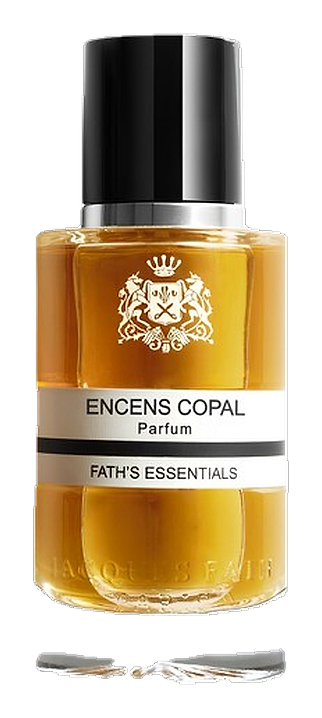
Encens Copal began with a discovery. Rania Naim, Creative Director at Jacques Fath, encountered Copal Blanc in Mexico, a resin that Mayans and Aztecs once burned as a sacred offering. She brought that encounter to Jean-Christophe Hérault, the perfumer behind some of the house's most recognized recent work. The brief was simple: translate the weight of that tradition into something wearable. Not a replica of ritual. A translation. Copal, the word itself, is the story, named for the resin that started everything.
What makes this composition unusual is the mastic. It gives the fragrance a green, resinous lift that keeps the smoke from becoming heavy or monotone. Most incense fragrances lean dark from the start. Encens Copal earns its smoke through the top and heart, hazelnut warmth, geranium's quiet floral, orris adding a powdery Iris undertone that feels almost contemporary. The result is incense that breathes. The frankincense in the base doesn't overpower, it settles, with labdanum's resinous labrusca note and benzoin's sweet warmth creating a drydown that stays close to skin for hours.
The evolution
The opening is the surprise. Mandarin and Bergamot arrive bright, almost edible, citrus that catches light rather than announces. Hazelnut threads through, warm and nutty, preventing the usual sharp fade into the heart. Then mastic takes over. The green, slightly anise character shifts the energy from bright to aromatic, with geranium lending a quiet floral counterpoint. The orris root keeps things grounded, adding a powdery iris undertone that feels unexpectedly modern. The base builds slowly. Frankincense becomes more present as the heart softens, revealing the resinous depth that defines the drydown. Benzoin and labdanum layer into a warm, balsamic foundation, smoky without being heavy, sweet without being loud. The drydown stays close to skin for hours, the kind of presence that someone near you notices before you do.
Cultural impact
Encens Copal arrives at a moment when perfumers are increasingly drawn to pre-Columbian aromatics as a source of inspiration. Copal, long considered the lesser-known cousin of frankincense, carries centuries of ritual significance in Mesoamerican traditions where it was burned in ceremonies to facilitate communication with the divine. Jacques Fath's decision to center the fragrance on Copal Blanc resin places this material in a luxury context that feels both reverent and exploratory. The fragrance bridges indigenous aromatic heritage and contemporary Western perfumery, giving wearers access to a material that most would encounter only in specialty shops or cultural museums.