The Story
Why it exists.
The beginning
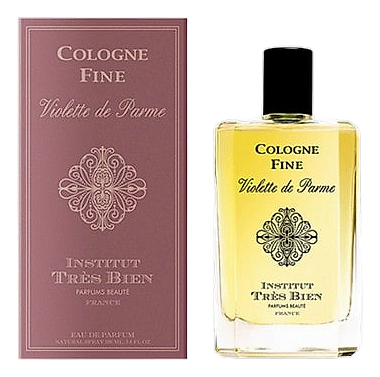
Institut Très Bien built a small catalog around a single, curious idea: what if the classical cologne wasn't a format but a passport? Each release in the Cologne Fine series took a fragrance tradition and translated it through a specific creative lens. Violette de Parme, launched in 2016, was one such release. Perfumer Vanina Muracciole was given a brief built around the Parma violet, a note that has tempted noses for generations precisely because it refuses to behave. Sweet but austere. Floral but almost mineral. The kind of material that demands a careful structure around it or it disappears entirely. Muracciole treated the violet as a quiet protagonist rather than a showcase, letting the composition lean into restraint rather than volume.
What makes this composition worth a second look is the choice to anchor a notoriously fragile floral with galbanum, one of perfumery's sharpest green materials. Galbanum is the opposite of violet: loud, bitter, almost metallic, the smell of a crushed stem. The violet leaf absolute, already greener and more vegetative than the flower itself, acts as a bridge between these two poles. Mimosa arrives at the heart, powdery and honeyed, softening the composition's edges without dissolving its structure. It is a small pyramid. Four materials.
The evolution
The first ten minutes are the loudest this fragrance ever gets, and they are not loud at all. Galbanum arrives with a green, almost bitter snap, the kind of sharp resinous quality that makes you think of a stem snapped between fingers. Beneath it, violet leaf absolute hums, greener and more vegetal than the flower will ever be. For a few minutes the composition reads almost herbal, like something you'd find growing along a stone wall in early spring. Then it settles. The Parma violet blooms into the space the galbanum carved, powdery and slightly sweet but never syrupy. Mimosa appears at the edge, lending its honeyed, hay-like warmth, and the whole thing softens into something quietly intimate. By the two-hour mark the green has faded almost completely. What remains is violet and the ghost of mimosa, reading close to the skin as a soft, dry powder.
Cultural impact
This fragrance carries a quiet weight within the violet perfume conversation, and its production status as apparently discontinued only sharpens that sense of weight. Those who know it tend to know it precisely. It appeals to a particular kind of wearer: someone who already has a relationship with Parma violet as a material and doesn't need convincing that green and powder can coexist in one composition. There's no attempt here to appeal to a broader audience or to soften the violet's more austere qualities into something more crowd-friendly.