
The Story
Why it exists.
The beginning
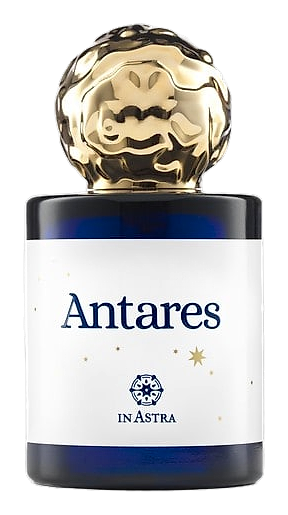
Antares takes its name from the red supergiant star that bleeds light into the summer sky, rivaling Mars in its glow, a dying star magnificent in its final phase. Sofia Bardelli built this fragrance around the same tension: the solstice, when summer reaches its peak and the longest night begins its slow take-back. Peak abundance and the first whisper of what's ending. That's the contradiction at Antares's heart. It's opulent without apology, warm without heaviness, floral without fragility. The kind of scent that arrives like a declaration and settles into skin like a secret.
What makes Antares unusual is the absence of ornament. No supporting notes, no softening agents, just pink pepper, tuberose, frangipani, sandalwood, and amber. Five materials in a straight line. Sofia Bardelli lets the tropical sweetness of the white flowers do their own work rather than tempering them. Tuberose can be creamy, can be indolic, can be sharp and green. Here it leans into its most tropical register, thick, heady, almost narcotic. Frangipani reinforces that warmth without competing. The pink pepper isn't a bridge between top and heart, it's a spark that cuts through, reminding you the composition has edges.
The evolution
Pink pepper opens Antares like a flare shot into a warm night. Bright, slightly fizzy, a citrus-adjacent spark that reads as energy rather than fruit. This phase is fleeting, a brief moment before the white flowers arrive in full force. Tuberose and frangipani bloom together, heavy and tropical, the kind of richness that can read almost animalic depending on your skin. On some, there's a sharpness that borders on chemical, Loustella on enthusiasts called it "almost chemical, but not in a negative way." That biting quality softens into something warmer within the hour. The drydown belongs to sandalwood and amber. The warmth deepens, the flowers recede, and Antares settles into something close and skin-warm that refuses to leave. The scent shows up on clothes the next morning, a lingering reminder of its presence.
Cultural impact
Antares arrived in 2020 as a minimalist counterpoint in a market that had grown increasingly complex. In Astra stripped back to five materials in a straight line, choosing clarity over complication. The name itself, In Astra meaning among the stars, signals an intent to position fragrance as something cosmic and aspirational rather than fashion-adjacent. This celestial-minimalist approach found its audience among those seeking authenticity over abundance.