
The Story
Why it exists.
The beginning
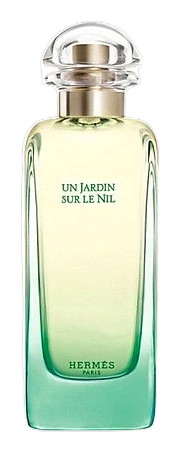
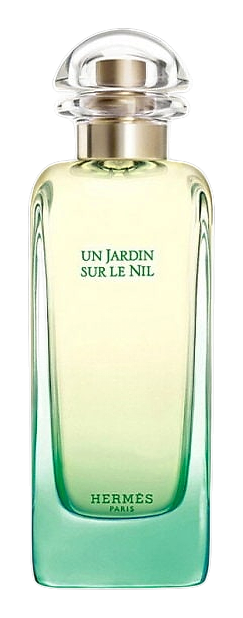
Un Jardin sur le Nil arrived in 2005 as part of Hermès's Parfums-Jardins collection, a line that treats gardens not as backdrops but as subjects worth bottling. Jean-Claude Ellena composed the scent with an economy of gesture that has become his signature. He builds by taking away, paring a formula back until only the load-bearing notes remain. The result here is a riverbank rendered in motion: green growth pressing against slow water, fruit that hasn't yet learned to sweeten, air that feels humid without ever turning heavy. The composition reads as a single sustained breath rather than a sequence of events, and that breath smells like somewhere you half-remember from a childhood you may not have had.
What makes the composition unusual is how the notes arrange themselves, or rather how they refuse to arrange themselves into anything conventional. Green mango, lotus, calamus, frankincense, and sycamore maple exist in the same breath, layered so tightly that you smell the garden rather than individual plants. The effect is closer to walking into a humid greenhouse than reading a list of ingredients. Green mango does the structural work, carrying a tart, slightly bitter fruit character that reads as unripe, vivid, and sharp against the warmer backdrop.
The evolution
The opening is brisk. Green mango and calamus arrive together, almost wet, with lotus threading through like river current. There's a sharpness here, a tartness, but it never tips into sour. Within fifteen minutes the frankincense surfaces, and the composition lifts. The sharpness softens into something rounder, more floral, without losing its watery clarity. By the two-hour mark, the green mango has receded into the background. What remains is a soft, vegetal warmth, the lotus now reading more creamy than aquatic, and the sycamore maple stepping forward with a woody sweetness that feels sun-exposed rather than dense. The calamus keeps a low hum underneath, reminding you the garden is still alive. In the final hours, often stretching past six, the fragrance settles into its quietest register. The fruits are gone. The lotus has whispered out. What's left is frankincense and sycamore maple, a clean, slightly resinous wood that smells like the ghost of a garden after the sun moves on.
Cultural impact
Un Jardin sur le Nil has earned its place as a warm-weather classic, a scent that feels almost purpose-built for humid air and long afternoons. It carries a naturalism that reads as refined without formality, the kind of composition that suits a linen suit as easily as a t-shirt and never feels out of place in either setting. The fragrance speaks to a particular appetite in modern perfumery, one that craves place and atmosphere over abstract floral construction. Wearers tend to reach for it when they want something green, green enough to suggest vegetation and water without ever tipping into aquatic cliché.