The Story
Why it exists.
The beginning
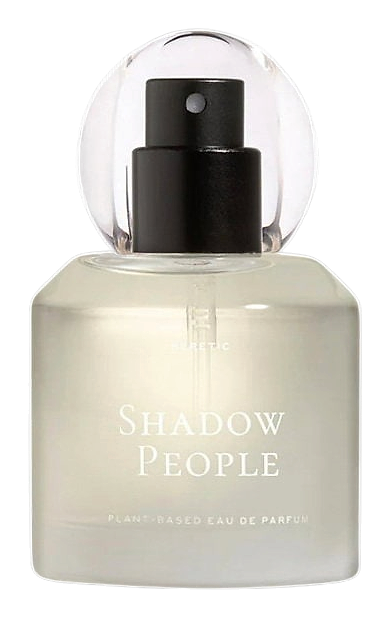
Shadow People is part of Heretic's Ghosts collection. Released in 2026, the fragrance was created in collaboration with musician Chelsea Wolfe. The official description names dust, oakmoss, and static electricity. Those three materials set the boundaries of the composition, and the rest lives in the negative space between them. What comes off the skin in those first minutes is a quiet, unsettled dust, particulate and dry, the kind that catches in throat light before settling into something colder. The oakmoss arrives soon after, not as a top note but as a slow undertow, astringent and raw, pulling the composition downward into darker registers. Static electricity hangs at the edges, a charge that never fully grounds itself, lending the whole thing an almost metallic hum.
What makes Shadow People unusual is its refusal to warm up. Most green compositions lean toward forest, toward life. This one moves the opposite direction, toward stone, toward soil, toward the atmospheric charge that builds before something breaks. The electro-static accord is doing something rare here, registering as a pressure rather than a note, a feeling of the air thickening. Dust appears as an actual material rather than a descriptor, a particulate presence that softens everything behind it. Combined with geosmin, the molecule responsible for that petrichor smell after rain hits dry ground, the composition locks itself into a register most perfumery avoids. Cold, mineral, faintly alive.
The evolution
Shadow People opens with an almost clinical chill. The first minutes feel like walking into a room where the heat has been off for weeks, dust settled on every surface, air that hasn't moved. Within the first hour, the oakmoss asserts itself, astringent and sharp, threading through the static charge like a vine through a wire fence. This isn't a fragrance that blooms. It tightens. The heart settles into something closer to cold petrichor and damp stone, the kind of mineral darkness that follows rain into basement earth. By the third hour, the composition has gone sheer. It doesn't vanish. It retreats to the edges, sitting close to the skin where only the wearer notices it. The drydown is where the fragrance becomes most interior, most its own thing, a faint mossy trace that clings without demanding attention.
Cultural impact
Shadow People sits in a niche corner of the fragrance world where atmospheric and unsettling are selling points. For wearers drawn to fragrance as mood rather than adornment, this one reads as a composition that knows exactly what it is and refuses to soften itself for easier appeal. It belongs to a small current of perfumery that treats scent as atmosphere, as environment, as something closer to installation art than personal adornment. The fragrance doesn't perform for a room or compete for compliments. It builds a private weather system around the wearer and stays there.