The Story
Why it exists.
The beginning
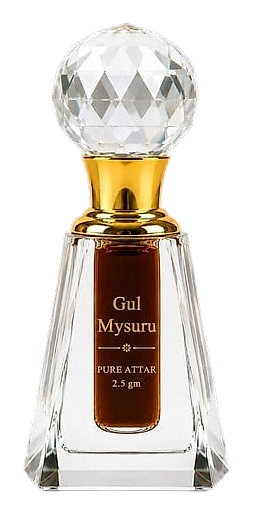
Gul Mysuru is a fragrance rooted in a place where perfumery carries weight. HeavenDuft, an independent Indian perfume house, released this composition in 2024 as part of an ongoing exploration of traditional Indian materials done one bottle at a time. The architecture is deliberately spare: three notes, each one chosen because it earns its place. Red rose opens the conversation, rich and direct, setting the tone without preamble. Opoponax, the bittersweet resin sometimes called "sweet myrrh," takes the middle position, lending warmth and depth to what might otherwise be a purely floral affair. Mysore sandalwood closes the composition, its creamy woody character anchoring the brighter materials above it. The Mysore connection is the point.
What's unusual here is the restraint. Rather than building a rose fragrance on a dozen supporting notes for complexity, this one strips it back to essentials, trusting that quality materials can carry a composition without scaffolding. Red rose is the obvious star, yes, but the opoponax pairing is the move worth noticing. Opoponax brings a warm sweetness, less bright than honey, more grounded and resinous, with a slight bitterness underneath that keeps it from cloying.
The evolution
On skin, Gul Mysuru opens with a red rose that's deep and jammy rather than fresh-picked. There's an almost candied quality to the first fifteen minutes, the petals feeling thick and close rather than airy, as if you're pressing your nose into a dense bouquet rather than catching a passing breeze. By the half-hour mark, opoponax makes its presence known, bringing a warm resinous undertone that shifts the rose from sweet to something more contemplative. This is the phase that defines the wear. The resin sits in the background for the next two to three hours, never overtaking, always grounding, lending a smoky warmth that softens the rose without diminishing it. Around the four-hour mark, the sandalwood begins its slow takeover. The rose recedes to a faint memory, and the Mysore material takes over completely, creamy and woody with that signature warmth.
Cultural impact
Gul Mysuru does something quietly radical: it trusts three materials to carry the entire composition. Rather than building on a fifty-note pyramid, this fragrance relies on the quality and character of its individual ingredients to create complexity through interaction rather than accumulation. The Mysore sandalwood source connects it to Indian perfumery traditions with deep historical roots, tying the composition to materials and methods that have been refined over generations. This is minimalism that comes from knowing materials deeply rather than defaulting to complexity for its own sake.