
The Story
Why it exists.
The beginning
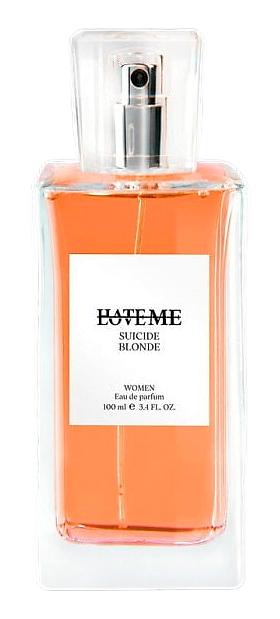
Suicide Blonde arrived through Hate Me Love Me's fragrance lineup, a composition that speaks in a register both edible and intimate. Built around the tension between bitter citrus and creamy warmth, it reads as a bold statement in scent form. The opening announces itself without apology: sharp, sweet, slightly bitter, immediately recognizable as something that doesn't aim for the background. What unfolds is a composition that holds its contradictions comfortably, refusing to settle into a single mood. The fragrance moves between brightness and softness, between something that sparkles on skin and something that sinks right into it. It gestures toward gourmand territory but never commits fully, keeping a slight austerity in the citrus that the creamier notes only soften, never erase.
What makes this composition work isn't the gourmand angle alone; it's the pairing of bitter orange with white peony, two materials that usually live in different rooms. The orange brings that Aperol-spritz brightness, the kind of bitter-citrus snap that reads more cocktail than perfume. Then peony arrives, something creamier and more rounded, almost milky, a floral note that behaves more like a dairy note than a traditional bouquet.
The evolution
The first ten minutes are almost aggressive in their sweetness. Bitter orange hits hard, peony cushions it, and the whole opening reads like a dessert cocktail poured too quickly. By the thirty-minute mark, the citrus starts receding and the white peony blooms into something fuller, rounder, almost lactonic. The drydown is where Suicide Blonde becomes interesting. Tahitian vanilla takes the lead, but it doesn't go sugary; the cashmeran underneath keeps it grounded, woody, almost slightly smoky. Heliotrope adds a marzipan sweetness that lingers on skin for hours. As the hours pass, what's left is a warm, creamy skin scent, vanilla and tonka wrapped in cashmeran's soft haze, the kind of trace that feels like it belongs to you rather than to the bottle. The composition doesn't just fade; it transforms, each phase pulling something new from the same set of materials.
Cultural impact
Suicide Blonde distinguishes itself through its bitter-orange-to-peony opening, which provides a sharper entry than compositions that lead directly into vanilla territory. The cashmeran-laced drydown keeps the overall impression from reading as straightforward dessert, lending a woody, skin-close quality that grounds the sweeter elements. The result is a fragrance that carries gourmand warmth without the full sugar load of the genre's heavier hitters, and the composition's structure allows it to flex between playful and restrained depending on the wearer's skin and the surrounding context.