
The Story
Why it exists.
The beginning
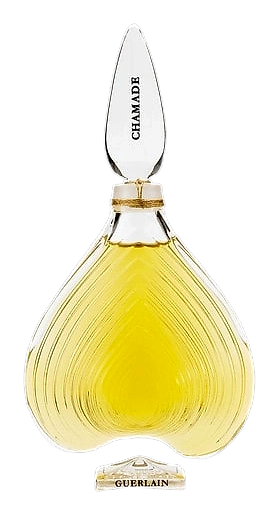
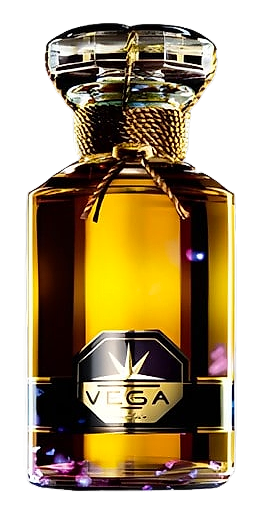
In 1936, Jacques Guerlain named his latest creation for Vega, a luminous star in the Lyra constellation. The fragrance became part of the Maison Guerlain's permanent collection in 2014, now exhibited in the Hall of Mirrors alongside pieces that document nearly two centuries of Parisian fragrance history. Vega was reissued once, in 2005, as part of the 'Il était une fois Guerlain' collection, a rare return for a perfume that had long been absent from the market. The composition reflects a particular moment in the house's creative history, a time when Guerlain was exploring the boundaries of what aldehydic florals could achieve. Those who encountered the original formulation remember it as a fragrance of remarkable presence, one that commanded attention without announcement.
What makes Vega structurally unusual is how the aldehydic opening introduces the florals in a way that remains present throughout the heart. The composition uses that metallic shimmer as an entry point, with jasmine and ylang-ylang providing a lush floral backdrop. The carnation in the heart is the surprise: a spice that could overwhelm in less careful hands, here kept in check by the powdery iris and the steady warmth of sandalwood arriving from the base. It's a composition that trusts the wearer to handle complexity without flinching.
The evolution
The aldehydes open sharp and cold, sparkling like ice cubes in a crystal glass. Bergamot and citrus notes brighten the top, pulling the metallic brightness toward something more radiant. Then the heart takes over, jasmine dominates, but ylang-ylang rises beneath it, tropical and heady, while carnation adds its characteristic clove-like bite. Iris and sandalwood arrive to ground it. By hour three, you're in the vanilla-and-amber drydown, warm and powdery, intimate rather than announced. The fragrance evolves gracefully, each stage revealing new dimensions while maintaining the overall composition's coherent vision.
Cultural impact
Vega occupies a specific moment in Guerlain's history, a period when the house was developing its voice as a defining presence in French perfumery. It was discontinued at some point, then revived briefly in 2005 before returning to the archives. Today it exists primarily in the secondary market and in the memories of those who wore it during its original run. For collectors, the reissue is a Grail. For newcomers, it's a window into how aldehydic florals were constructed by one of the great houses of perfumery.
The House
GuerlainGuerlain stands as one of the oldest and most revered perfume houses in the world, founded in Paris in 1828 by Pierre-François-Pascal Guerlain. What began as a boutique on rue de Rivoli quickly became the preferred destination for Parisian society, attracting dandies and elegant women who sought custom-crafted fragrances. The house's influence grew to such heights that Guerlain earned the title of Official Perfumer to Napoleon III after presenting Eau de Cologne Impériale to Empress Eugénie as a wedding gift in 1853. This royal patronage marked the beginning of Guerlain's enduring association with European aristocracy, as the house went on to create fragrances for Queen Victoria and Queen Isabella II of Spain. Today, under the creative direction of Thierry Wasser, the fifth-generation perfumer, Guerlain continues to shape the landscape of fine fragrance with a portfolio spanning over 1,100 olfactory creations. The house remains headquartered at its legendary Champs-Élysées mansion, a historic monument that anchors Guerlain's position at the intersection of heritage and contemporary luxury.
The Creator
Jacques GuerlainJacques was among the first perfumers to work seriously with synthetic ingredients alongside naturals, publishing on essential oils with chemist Justin Dupont and experimenting with perfuming ink. His technical approach was precise: volume measurements for liquids, careful wei…