
The Story
Why it exists.
The beginning
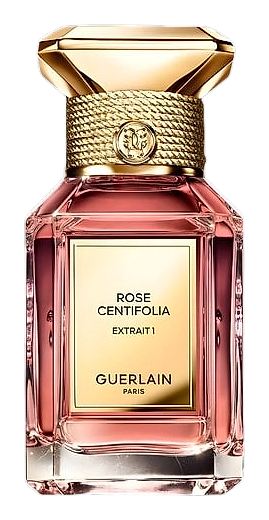
Thierry Wasser built this around a single rule: the Grasse rose must reach the still within twenty-four hours of harvest. Not because the brand insists on it, though they do, but because that's when the fatty absolute holds everything it has. Wasser worked within Guerlain's Signature Extracts collection, where each fragrance isolates one raw material from the Guerlinade and pushes it to its limit. For Rose Centifolia Extrait 1, the work speaks for itself.
Rose Centifolia absolute carries spicy and honeyed facets that synthetic recreations flatten into nothing. The 30% concentration means those facets arrive without apology, caramel-adjacent sweetness with a grounding edge, the ghost of the flower still attached to its stem. Frankincense doesn't soften this rose; it frames it, lending smoke and structure where a lighter hand would have let the sweetness tip into something one-note. Patchouli does the quiet work underneath, earthy and deep, preventing the whole composition from floating away.
The evolution
The opening arrives all at once, rose absolute so dense it almost coats the inside of the nose. No gradual unfurling here; this is a flower walked into the room rather than slipped through the door. Within twenty minutes, the frankincense announces itself as actual smoke, not the abstract kind, something that reads as warmth against skin rather than a note on paper. The patchouli takes longer to arrive, working beneath the surface before anchoring the whole composition to earth. What stays longest is the honey-and-incense drydown, lingering well beyond what lighter concentrations would allow, a faint waxy rose trace that lingers like the memory of a place rather than the place itself.
Cultural impact
Rose Centifolia holds an almost mythological place in French perfumery, valued for its complexity and depth in ways that synthetic alternatives have never fully replicated. The flower carries a density of aroma that perfumers have sought for generations, a honeyed warmth threaded with spicy undertones that only become apparent at high concentration. Guerlain's use of this material goes back nearly two centuries, finding in the rose a character that could anchor or elevate any composition, something that pairs with the house's signature base while also standing alone.
The House
GuerlainGuerlain stands as one of the oldest and most revered perfume houses in the world, founded in Paris in 1828 by Pierre-François-Pascal Guerlain. What began as a boutique on rue de Rivoli quickly became the preferred destination for Parisian society, attracting dandies and elegant women who sought custom-crafted fragrances. The house's influence grew to such heights that Guerlain earned the title of Official Perfumer to Napoleon III after presenting Eau de Cologne Impériale to Empress Eugénie as a wedding gift in 1853. This royal patronage marked the beginning of Guerlain's enduring association with European aristocracy, as the house went on to create fragrances for Queen Victoria and Queen Isabella II of Spain. Today, under the creative direction of Thierry Wasser, the fifth-generation perfumer, Guerlain continues to shape the landscape of fine fragrance with a portfolio spanning over 1,100 olfactory creations. The house remains headquartered at its legendary Champs-Élysées mansion, a historic monument that anchors Guerlain's position at the intersection of heritage and contemporary luxury.
The Creator
Delphine JelkJelk builds compositions around contrast and tension—warm, round, and inviting, yet never soft. Her signature leans heavily on iris, musks, and powdery facets that give her work a distinctive texture, like cashmere caught in amber.