The Story
Why it exists.
The beginning
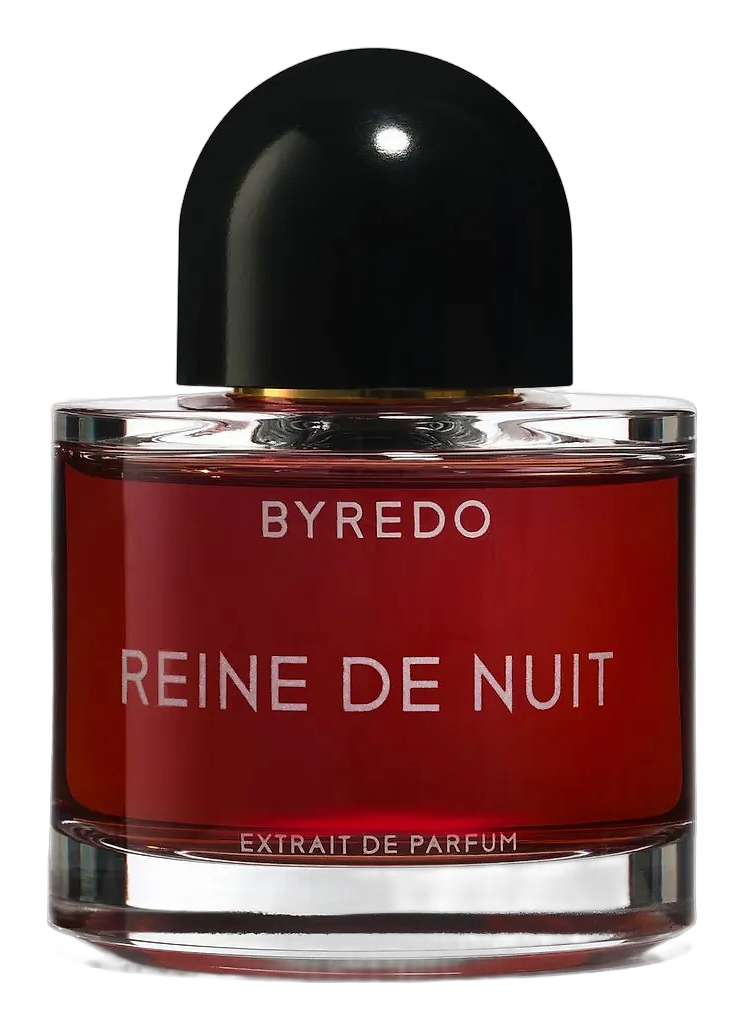
Byredo, founded in Stockholm in 2006 by Ben Gorham, builds fragrance from memory and minimalism. Reine de Nuit belongs to the Night Veils collection, scents for darkness and intimacy. The name alone tells you everything: Night Queen. Not a morning flower. Not a polite bouquet. Something that blooms after sunset and refuses to fade. The 2019 expression brings blackcurrant and saffron into conversation, two ingredients that demand attention before settling into more familiar floral territory.
The note structure reflects Byredo's approach: raw materials used with precision rather than excess. Blackcurrant and saffron work together in the opening because they share a certain darkness, a tartness that refuses sweetness. Rose appears in the heart not for conventional floral elegance but for its ability to feel slightly shadowed. Frankincense adds weight without heaviness. Ambrette seed provides musk without animalic intensity, and patchouli grounds everything with its characteristic earthy warmth.
The evolution
The journey from opening to drydown traces a precise arc. Blackcurrant and saffron arrive together, the former tart and dark, the latter warm and almost medicinal. Within minutes, rose begins to emerge, petals softened by the saffron's lingering presence. Frankincense joins quietly, not as smoke but as resin, lending a sacred quality. By the drydown, ambrette seed and patchouli take over, creating warmth that stays close to skin for hours.
Cultural impact
The Night Veils collection marked Byredo's definitive pivot into architectural perfumery in 2019, and Reine de Nuit sits at its darkest core. Unlike the house's more accessible florals, this fragrance arrived with little fanfare and demanded effort from the wearer. Its blackcurrant-saffron opening was unusual at the time, pairing fruit with spice in a way that felt more like a fragrance experiment than a commercial launch. The incense-rose-patchouli drydown became a reference point for dark rose compositions in subsequent years, influencing how niche houses approached evening wear. Byredo's refusal to name a credited perfumer added to the mystique, positioning the fragrance as a collective statement rather than a single creator's vision. That strategy matched the times: fragrance audiences were moving away from celebrity noses and toward house identities.