
The Story
Why it exists.
The beginning
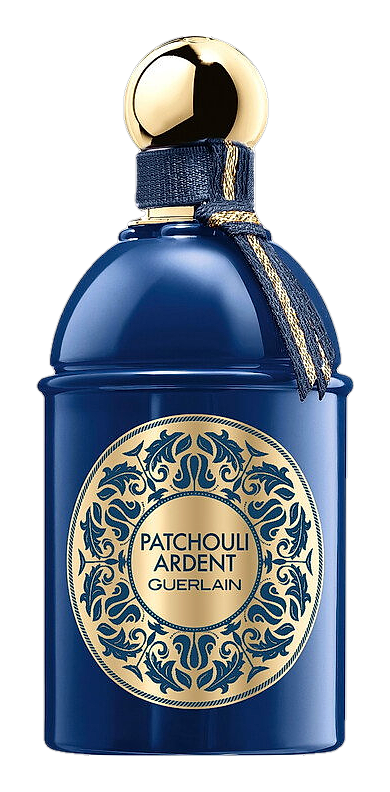
The Absolus Allegoria collection represents Guerlain's exploration of nature's contrasts revealed under moonlight, and Patchouli Ardent fits squarely within that vision. Thierry Wasser, the house's third-generation in-house perfumer, approached patchouli with a different question: what if this often-heavy note could be reframed through freshness and contrast? Rather than building around patchouli's darkest tendencies, Wasser introduced elements like black pepper and green fig that create an initial brightness that makes the eventual earthy warmth feel surprising rather than inevitable. The composition draws from the same heritage that has made Guerlain the Official Perfumer to French royalty since 1853, applying that accumulated knowledge to a more contemporary sensibility.
Guerlain's philosophy with Patchouli Ardent centers on the idea that patchouli need not be defined solely by its darkest interpretations. Wasser selected materials that create contrast against the note's natural tendency toward heaviness. Black pepper provides warmth without weight, green fig offers a verdant quality that lifts the composition, and rose introduces an elegance that keeps the overall feel refined rather than rustic. The cedarwood in the heart serves a dual purpose: it supports the patchouli while also preparing the wearer for the leather that will eventually emerge.
The evolution
Patchouli Ardent moves through its evolution with clear intention. The opening unfolds in three distinct layers, starting with the sharp impact of black pepper before the green fig introduces a translucent freshness that feels almost dewy. Pink pepper adds a final shimmer, and together these notes create an impression that reads as unexpectedly bright. The transition to the heart phase happens gradually, with patchouli emerging not as a statement but as a foundation. Rose arrives softly, its presence more implied than declared, while cedarwood provides structural support. By the time the drydown arrives, leather takes center stage, its smooth quality supported by musk that extends the fragrance into intimate territory. The patchouli that dominated the heart becomes a subtle shadow, present but no longer leading the conversation.
Cultural impact
Patchouli Ardent arrives at a moment when the note itself has been reclaimed, no longer the counterculture signal of the '70s, but a sophisticated anchor for modern compositions. What Guerlain does here is different: rather than leaning on patchouli's dark reputation, it makes the note luminous. The response has been consistent, elegant, mature, and powerful. Wearers describe it as the scent of someone who walks into a room and doesn't need to announce themselves. The woody-rose combination and strong longevity have drawn comparisons to higher-price-point competitors, but this holds its own. It sits comfortably between heritage and desire, patchouli for the person who's done hiding.
The House
GuerlainGuerlain stands as one of the oldest and most revered perfume houses in the world, founded in Paris in 1828 by Pierre-François-Pascal Guerlain. What began as a boutique on rue de Rivoli quickly became the preferred destination for Parisian society, attracting dandies and elegant women who sought custom-crafted fragrances. The house's influence grew to such heights that Guerlain earned the title of Official Perfumer to Napoleon III after presenting Eau de Cologne Impériale to Empress Eugénie as a wedding gift in 1853. This royal patronage marked the beginning of Guerlain's enduring association with European aristocracy, as the house went on to create fragrances for Queen Victoria and Queen Isabella II of Spain. Today, under the creative direction of Thierry Wasser, the fifth-generation perfumer, Guerlain continues to shape the landscape of fine fragrance with a portfolio spanning over 1,100 olfactory creations. The house remains headquartered at its legendary Champs-Élysées mansion, a historic monument that anchors Guerlain's position at the intersection of heritage and contemporary luxury.
The Creator
Thierry WasserWasser gravitates toward green, crispy notes and the bold florals Guerlain is known for. Bulgarian rose appears repeatedly in his work, and he travels annually to oversee the harvest in Kazanlak.