The Story
Why it exists.
The beginning
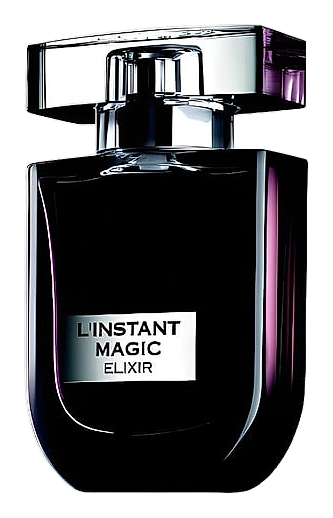
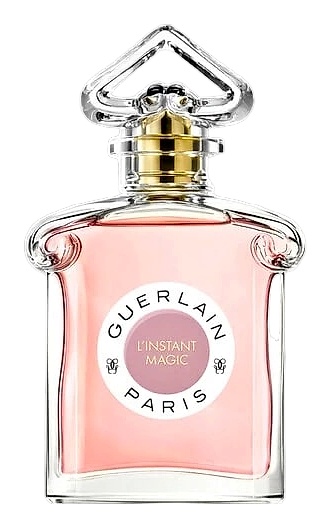
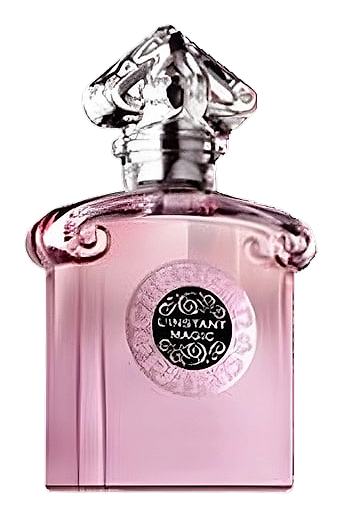
L'Instant Magic arrived in 2008 from Guerlain's Les Légendaires collection, created by perfumers Randa Hammami and Sylvaine Delacourte. The name says everything: magic as an instant, not a spectacle. Not a grand gesture fragrance. Something quieter, more specific, the kind of moment that changes the texture of an afternoon without anyone in the room noticing exactly why. The brief, if there was one, seemed to ask: what does Guerlain smell like when it's not trying to prove anything?
What makes L'Instant Magic chemically interesting is the debut of the Musquinade accord, a Guerlain signature move that layers powdery florals against a creamy, warm base. The accord doesn't announce itself. It just makes everything it touches feel like it belongs together. Freesia and violet become inseparable. Almond and white musk become one idea. The fragrance doesn't build so much as settle into something it was always going to become. That sense of inevitability is harder to achieve than it sounds.
The evolution
The opening is bergamot and anise, a clean, slightly sweet citrus that lifts the composition without friction. Within minutes, freesia takes over the center stage, supported by violet and rose in a soft floral coalition. The Guerlain powder note emerges here, that characteristic iris-adjacent softness that makes the whole thing feel like it belongs to a different era of perfumery, when subtlety was still a virtue. The base arrives not with a hand-off but a slow blend: almond's quiet warmth, vanilla's cream, white musk's skin-like cleanliness, sandalwood's softness, cedar's dry wood. The drydown is intimate. This is not a fragrance that fills a room. It stays close, almost conspiratorial, the kind of sillage that someone leaning in will discover before someone across the table. As time passes, a clean skin-musk remains, the signature without the structure.
Cultural impact
L'Instant Magic occupies a specific corner of the Guerlain universe: the soft, powdery, quietly confident fragrance. Its fans tend to be exactly the kind of wearer who doesn't need a scent to announce them, someone secure enough to let a fragrance whisper rather than shout. The fragrance has maintained a steady presence in the Les Légendaires collection since 2008, accumulating a devoted following among those who prize longevity and restraint over projection and novelty.
The House
GuerlainGuerlain stands as one of the oldest and most revered perfume houses in the world, founded in Paris in 1828 by Pierre-François-Pascal Guerlain. What began as a boutique on rue de Rivoli quickly became the preferred destination for Parisian society, attracting dandies and elegant women who sought custom-crafted fragrances. The house's influence grew to such heights that Guerlain earned the title of Official Perfumer to Napoleon III after presenting Eau de Cologne Impériale to Empress Eugénie as a wedding gift in 1853. This royal patronage marked the beginning of Guerlain's enduring association with European aristocracy, as the house went on to create fragrances for Queen Victoria and Queen Isabella II of Spain. Today, under the creative direction of Thierry Wasser, the fifth-generation perfumer, Guerlain continues to shape the landscape of fine fragrance with a portfolio spanning over 1,100 olfactory creations. The house remains headquartered at its legendary Champs-Élysées mansion, a historic monument that anchors Guerlain's position at the intersection of heritage and contemporary luxury.
The Creator
Randa Hammami & Sylvaine DelacourteHammami favors rich floral compositions, with rose, iris, and orchid appearing prominently in her work. She pairs these with warm oriental bases, often incorporating incense and vanilla for depth.