The Story
Why it exists.
The beginning
In 2014, Guerlain revived an idea from 1994, Petit Guerlain, a fragrance that had lived in the memory of a generation. The original was designed for children. The 2014 version kept the name, kept the concept, and handed the project to Thierry Wasser to rebuild. The result is a fragrance that can be worn without occasion, where Guerlain's formal architecture gets softened into something approachable. 'Petit' kept its meaning of small, but here it reads as intimate rather than diminutive.
What makes the structure interesting is the combination of mimosa and honey in the heart. Mimosa is a yellow floral, powdery, slightly indolic, with a warm nutty quality that most perfumers treat as background material. Here, Guerlain paired it with honey and let the two interact. The honey sweetens the mimosa's natural earthiness. The result is a heart that reads as sweet but never as dessert. Then pistachio enters, not as a note you'd name, but as a soft, creamy warmth that keeps the base from disappearing entirely.
The evolution
Petit Guerlain (In Pink) opens bright. Green-orange blossom arrives immediately, clean, slightly bitter, the kind of freshness that clears the air before anything else has a chance to speak. It doesn't linger here. Within minutes, the honey and mimosa move in. The honey is golden and warm. The mimosa is powdery and soft. Together they create a heart that feels both sweet and restrained, Guerlain's particular talent for making sweetness look effortless. The drydown arrives quietly: white musk and pistachio, soft and powdery, settling close to the skin. The sweetness doesn't disappear, it gentles. What lingers at the end is a warm, clean whisper. Petit Guerlain (In Pink) is delicate. It doesn't try to convince you of anything. It just stays.
Cultural impact
Petit Guerlain (In Pink) lives in an interesting space, a reworked memory of a children's fragrance, now positioned for adults. The fragrance is soft, warm, and entirely without pretense. It doesn't announce itself or demand attention. Instead it offers something quieter, a reminder that not every fragrance needs to fill a room to leave an impression.
The House
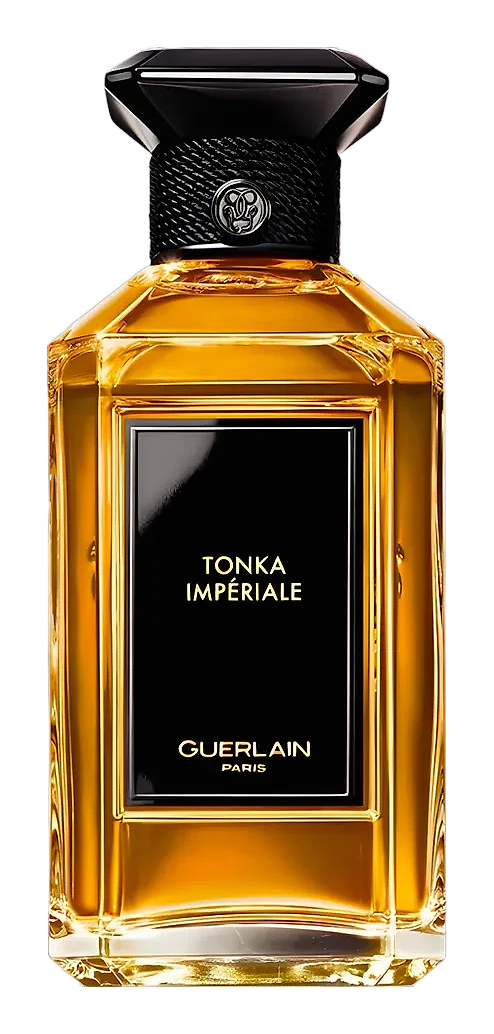
GuerlainGuerlain stands as one of the oldest and most revered perfume houses in the world, founded in Paris in 1828 by Pierre-François-Pascal Guerlain. What began as a boutique on rue de Rivoli quickly became the preferred destination for Parisian society, attracting dandies and elegant women who sought custom-crafted fragrances. The house's influence grew to such heights that Guerlain earned the title of Official Perfumer to Napoleon III after presenting Eau de Cologne Impériale to Empress Eugénie as a wedding gift in 1853. This royal patronage marked the beginning of Guerlain's enduring association with European aristocracy, as the house went on to create fragrances for Queen Victoria and Queen Isabella II of Spain. Today, under the creative direction of Thierry Wasser, the fifth-generation perfumer, Guerlain continues to shape the landscape of fine fragrance with a portfolio spanning over 1,100 olfactory creations. The house remains headquartered at its legendary Champs-Élysées mansion, a historic monument that anchors Guerlain's position at the intersection of heritage and contemporary luxury.
The Creator
Thierry WasserWasser gravitates toward green, crispy notes and the bold florals Guerlain is known for. Bulgarian rose appears repeatedly in his work, and he travels annually to oversee the harvest in Kazanlak.