
The Story
Why it exists.
The beginning
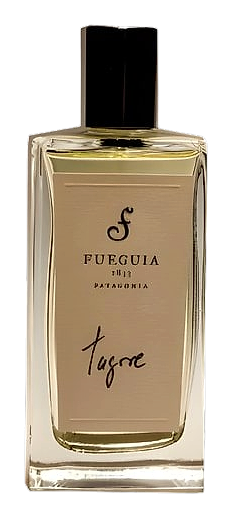
Julian Bedel created Tagore as a tribute to an improbable encounter, the Indian poet laureate and the Argentine cultural icon, Rabindranarath Tagore and Victoria Ocampo. Their correspondence, spanning continents and decades, produced a body of work that blurred the line between intimacy and intellect. Tagore, the Personajes collection tells this story not through sentiment but through material: cardamom from the opening, ambrette at the heart, coriander to close. Each note functions as a verse in a composition that reads differently with each wearing.
The composition holds an unusually tight note pyramid, three materials, no filler, nothing to hide behind. Cardamom provides the aromatic entry, sharp and slightly camphoraceous. Ambrette, derived from musk mallow seeds, contributes the unusual combination of musky warmth and quiet floral sweetness. Coriander seed, with its citrusy-green character, completes the drydown with an herbal lift that never fully fades. The result is a fragrance that smells like a thought, not a marketing brief. It's aromatic-spicy in the most literal sense, built from materials that exist in the kitchen and the apothecary alike, not from accord-building shortcuts.
The evolution
Cardamom opens first. Bright. Almost medicinal before it softens. The slight animalic edge some reviewers mention, that's the cardamom being honest about where it comes from. Within minutes, ambrette takes over. The transition isn't dramatic; it's more like a conversation finding its rhythm. The ambrette brings a nutty-floral warmth that reads as musky without being dirty. Clean, but with depth. Then coriander settles in. The drydown is green, warm, and quietly herbal. It stays close to the skin for hours. Moderate sillage means you have to lean in to catch it, which is exactly the point. The next morning, there's a faint trace on the wrist: coriander's quiet afterimage, like a verse you can't quite stop thinking about.
Cultural impact
Tagore occupies an unusual position in niche perfumery: it refuses the obvious moves. No oud, no ambroxan bomb, no fruit-sweet opening. Instead, it builds from cardamom, ambrette, and coriander, materials that belong equally to the kitchen, the apothecary, and the perfumer's organ. The fragrance has attracted wearers who describe it as meditative and elegant, though some find the slightly animalic cardamom divisive. The reception mirrors the fragrance itself: it doesn't try to please everyone, and that selectivity is precisely what makes it worth discussing.