
The Story
Why it exists.
The beginning
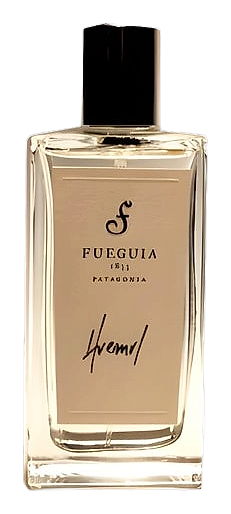
Huemul takes its name from the Andean deer, a wild creature that moves through the mountain forests of South America in near-silence. Julian Bedel built this composition in 2010 as part of the Fábula Fauna collection. The huemul is solitary, cautious, almost mythical, a deer so elusive that glimpsing one feels like a rumor confirmed. The fragrance translates that energy into scent: a creature musk that reads clean rather than dirty, floral where you'd expect fur. Three notes carry the entire weight of the composition, no fanfare, just the specific chemical profile of a quiet inhabitant and the dense, fern-heavy understory it threads through.
The choice to structure a fragrance around only three notes, Musk, Massoia, and Jasmine, gives each ingredient disproportionate weight. Most compositions pyramid a dozen materials to create complexity through layering, but here the architecture is stripped bare. Massoia bark delivers a coconut, lactone-rich sweetness that smells like cold milk or raw coconut flesh. Jasmine contributes indolic depth without the usual floral volume, appearing more as a shadow than as a bloom.
The evolution
The opening is surprisingly fresh. White musk hits almost clinical, the way fresh sheets smell before anyone has slept in them. Massoia arrives quickly, bringing a buttery coconut warmth that softens the cold opening into something edible, almost like milk warming on a stove. As the initial chill fades, jasmine surfaces low in the composition, not as a top-floral sparkle but as a creamy, slightly indolic undertone that reminds you skin is involved. The middle phase settles into a lactonic-musky territory, a stretch where the massoia's coconut sweetness and the musk's clean warmth blur into one creamy, animal-adjacent accord. It's the kind of moment where the fragrance stops smelling like a list of notes and starts smelling like a single, coherent scent. As the composition wears on, the sweetness recedes and the animal musk gains clarity, emerging sharper and more defined.
Cultural impact
Huemul sits within Fueguia 1833's Fábula Fauna collection. The collection's fragrances share a tight compositional logic, built on few notes and rendered with the kind of clarity usually reserved for botanical illustration. The house's aesthetic tends to attract wearers drawn to specificity over performance, people who want a fragrance that reads as a particular place rather than a generic mood. Huemul rewards wearers comfortable with quiet, close-to-skin scents rather than room-filling projection. Its musk massoia jasmine architecture is the kind of structure that reveals itself slowly, asking for attention rather than demanding it.