The Story
Why it exists.
The beginning
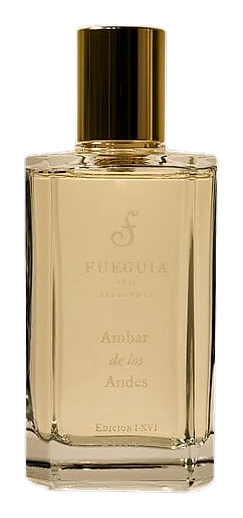
Ámbar de los Andes was released in 2016 as part of the Destinos collection, a line of fragrances that travels to specific places and brings back what those places smell like. Julian Bedel, the perfumer of Fueguia 1833, framed this one around the Andes themselves. Not the postcard version. The cold, mineral, high-altitude version, the kind where the air thins out and what survives is stone, resin, and whatever the mountain hasn't already taken. The brief, as the brand describes it, was to capture the transparent, aquatic side of a primitive wood, something found in a secret cave high in the range. From the opening, there's a clarity that reads almost geological, a wash of cold mineral tone that settles over the skin without burying it.
What's notable is the minimal note list. Three layers, each one a heavyweight. Jasmine at the top isn't behaving like a jasmine. It's not sweet, not indolic, not the white-floral diva you'd expect. Instead it reads aqueous and slightly green, a jasmine that's been put on a mountain diet. The sandalwood in the middle is doing the heavy structural lifting, warm and creamy against all that mineral cold. And the oud at the base isn't a Middle Eastern shouting oud. It's quiet, resinous, almost mineral itself, more like raw agarwood cut from wet wood than anything soaked in fashion. The composition holds together because everything is cold except the sandalwood, which leans into the warmth without breaking the chill.
The evolution
On skin, the first ten minutes belong to the jasmine, but it's not behaving. It arrives clean, almost watery, then pulls a low green thread through it like a current of cold air moving down a slope. There's smoke from the very start. Some of it's the oud flexing early, some of it's the sandalwood starting to warm up underneath. By the 30-minute mark the heart has settled in. Sandalwood takes the center, dense and creamy, and the jasmine still hums around it, though now it's a ghost, a memory of white-flower water rather than the flower itself. This is where the fragrance stops reading aquatic and starts reading woody, almost like a dried riverbed with something still flowing underneath it. The oud announces itself more decisively in the second hour, but it never roars. It's the brand's quiet, mineral oud: resinous, slightly smoky, with a faint metallic edge that keeps it sharp. At the 4-hour mark you'd be forgiven for thinking the fragrance was mostly done. It isn't.
Cultural impact
Wears like a private record, not a statement. The Destinos collection is built around a specific idea of place, and Ámbar de los Andes sits squarely within that frame. Rather than aiming for projection or crowd-pleasing warmth, it offers something closer to a held breath, a composition that reveals itself only on close attention. From the first spray, the scent reads cold and mineral, more reminiscent of wet stone and high air than of any conventional amber. As it warms against the skin, the amber note emerges in stages, never fully sweetening, never tipping into the gourmand territory that dominates much of contemporary perfumery.