

The Story
Why it exists.
The beginning
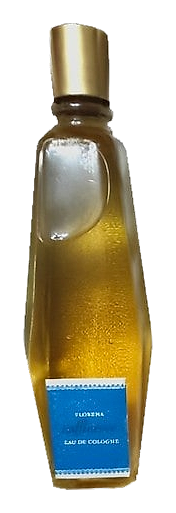
Raffinesse is a Florena fragrance introduced during the 1950s, though the exact release year is uncertain. Its name suggests cultivated elegance, but the composition wears that idea with less ceremony: powdery floral notes meet bright citrus and warm spice, creating a fragrance that feels fresh and warm at once. The available record is sparse, with no named perfumer or documented inspiration to trace. What the listed notes clearly suggest is a polished women’s fragrance built around contrasts: citrus brightness, floral softness, powder, and spice. Together, they create an impression that moves easily between delicate and assured, offering a distinct point of entry for exploration.
The interesting part is the conversation between categories. Citrus brings a quick lift, while powder gives the center a soft, blurred focus. Florals keep that haze elegant, and warm spice gives it structure. Raffinesse’s identity sits in the tension between fresh and spiced, soft and decisive. It doesn’t need a dramatic ingredient to make an entrance; the contrast is already there, built from accord families rather than a single headline note.
The evolution
Raffinesse’s listed profile is built from powder, floral, citrus, and spicy notes, giving the fragrance a character defined by contrasts rather than a documented scent progression. Powder supplies a soft, diffuse quality, while citrus brings brightness and clarity. Floral notes add a graceful, rounded dimension, balanced by the warmth and depth of spice. Their interaction creates a fragrance that can feel both fresh and composed without relying on any claimed sequence of reveal. What makes Raffinesse worth exploring is this varied note vocabulary: powder and florals soften the brighter citrus, while spice keeps the overall impression from becoming simply airy or sweet. The result is a polished, expressive fragrance with room for interpretation.
Cultural impact
Raffinesse was introduced during the 1950s and is associated with Florena, whose production is documented in Germany. Its powdery floral, citrus, and spicy note profile offers a clear point of entry into the fragrance: floral softness and powder meet citrus brightness, while spice adds warmth and definition. These contrasts give the composition an identity that feels poised but not ornate. Rather than assigning it an unsupported cultural role, its appeal can be found in its varied note vocabulary, which invites exploration of how powder, florals, citrus, and spice work together within the broader context of Florena’s catalogue.