
The Story
Why it exists.
The beginning
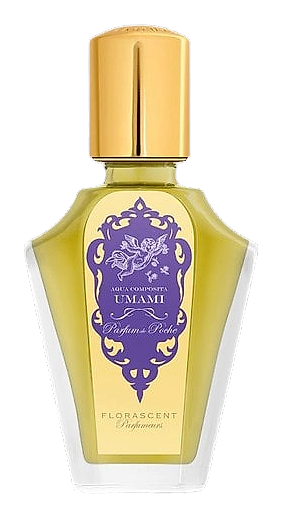
Umami explores the fifth taste, that savory depth beyond sweet, sour, salty, and bitter. The concept draws from a flavor category most people recognize from food but rarely encounter in fragrance. Florascent approached this by building a composition that moves through citrus brightness into creamy warmth, with spice playing against softer elements. The result feels familiar yet unexpected, a fragrance that sits comfortably between categories rather than claiming a single identity.
Ginger and pimento do the heavy lifting there. Both are warm spices, but the Osmanthus adds something unexpected, a soft apricot floral that bridges sweet and savory without choosing a side. In the base, sandalwood's dry, unsaturated character absorbs the sweetness rather than amplifying it. The tonka bean holds everything together, adding a powdery warmth that doesn't tip into dessert. The result is a fragrance that smells edible without being foody, that fifth taste, caught mid-breath.
The evolution
It opens bright. Yuzu hits first, sharp and clean, followed almost immediately by vanilla's cream. The two interact before the hand-off begins. Ginger arrives quietly at first, a warmth at the edges rather than the center. Then the pimento. That's when it changes. The bright opening gives way to something darker, earthier, more complex. Osmanthus keeps the florals soft, but they're background singers now. The drydown is sandalwood and tonka, warm and close. It lingers without announcing itself. Sweet and savory. Both at once.
Cultural impact
Umami sits in an unusual space, an oriental vanilla with savory undertones that resists easy categorization. The name draws from culinary vocabulary familiar to most people. It doesn't shout. It asks you to lean in.