
The Story
Why it exists.
The beginning
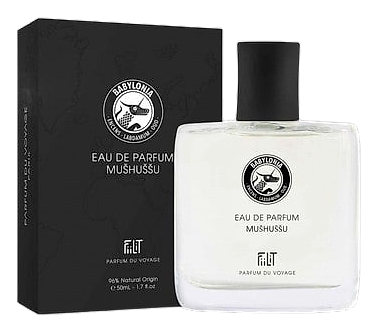
The hanging gardens of Babylon, one of the ancient world's seven wonders. A place that may or may not have existed, but that captured something in the imagination anyway. Régis at Fiilit reached for that story. Not to recreate it, but to find what it might have smelled like. The starting point was simple: temple incense drifting through precious woods and eastern spices. Frankincense smoke threading between cedar and sandalwood, oud burned as offering, the green of mint cooling the heat. And somewhere in that, the Mushussu, Babylon's protective genius, the hybrid creature carved into the Ishtar Gate, part dragon and part serpent, watching over everything. Babylonia is Fiilit's translation of that landscape. A sensory record of a place that lives in myth, built from the materials that might have grown there and the resins that would have burned.
The structure of Babylonia is its most interesting move. The opening, black pepper, elemi resin, frankincense, reads as spice and smoke, bright and aromatic. Then the heart does something unexpected: curly mint arrives, cool and green, cutting against the warmth. Nutmeg threads through, adding its own warm spice. That cool-warm tension is the fragrance's argument. It's not harmony exactly. It's contrast that creates something more alive than either side alone. The mint doesn't soften the spices, it sharpens them by opposition. And by the time both settle into the base, the oud and labdanum and sandalwood have room to breathe without competing with a heavy top note.
The evolution
The opening announces itself with pepper's bright bite and elemi resin's citrus-pine quality. Frankincense smoke threads underneath, cool and austere. Within minutes, the curly mint arrives, cool, green, slightly sweet. It doesn't wait politely. It interrupts the warmth and creates a strange, compelling tension with the nutmeg that follows. The drydown is where it earns its name. Labdanum brings its balsamic warmth, sandalwood its creamy wood, and oud its dark, animalic resin depth. The frankincense from the top note resurfaces, connecting the drydown to the opening in a loop. The sillage settles to moderate, present without broadcasting. Close enough to notice, intimate enough to hold a room. Performance is reliable. The mint-forward opening lasts about an hour, then the heart develops. The oud and incense fully emerge around the third hour and stay for another 4 to 6 hours depending on skin chemistry. On fabric the next day, a faint trace of smoky oud remains.
Cultural impact
Babylonia belongs to a specific corner of niche perfumery, incense-forward orientals with a green twist. That mint-spice contrast is unusual enough to divide opinion, which is healthy. It means the fragrance has something to say rather than just smelling pleasant. The 2019 launch placed it in a period when oud had become mainstream enough to feel exhausted; Babylonia's fresh-herbal counterpoint offered something for wearers tired of the same heavy oriental formulas.