The Story
Why it exists.
The beginning
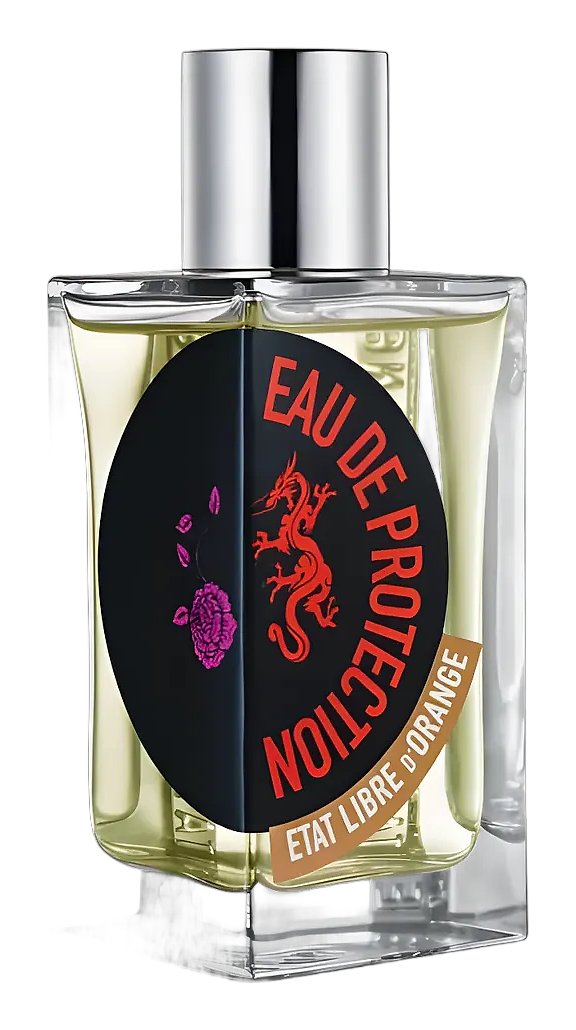
Eau de Protection arrived in 2007 as a collaboration between État Libre d'Orange and actress Rossy de Palma, the surrealist muse whose face has graced Almodóvar films and fashion campaigns alike. The brief wasn't a concept handed down from marketing. It was a person, a sensibility, a way of seeing. Rossy de Palma doesn't do expected. Neither does this fragrance. Antoine Lie translated her energy into something that protects without numbing, a magic potion, as the house calls it. Roses with thorny stems.
The note structure is where the interesting tension lives. Ginger and black pepper open aggressive, a wall of spice that announces itself without apology. Bitter orange keeps it bright, citrussy, almost effervescent. But the heart is where things soften: Turkish rose absolute and jasmine together create a floral warmth that isn't shy, just confident. Heliotrope adds that powdery, slightly retro edge that makes the whole composition feel like it belongs to a different decade. The base, patchouli, benzoin, tonka bean, keeps everything grounded in warmth. This isn't a linear rose fragrance. It's a rose that learned to fight back.
The evolution
The opening doesn't wait. Ginger and black pepper arrive together, sharp and immediate, with bitter orange lending a citrussy brightness that prevents it from becoming purely aggressive. The first twenty minutes are the boldest statement the fragrance makes. Then the hand-off begins. The spice softens, and the Turkish rose emerges, not gentle, but present. Jasmine joins, adding a heady, almost narcotic warmth. Heliotrope pulls the florals toward powdery cream, creating a heart that feels both modern and slightly retro. By hour three, the florals have settled into the skin. The base takes over: patchouli's earthiness, benzoin's resinous sweetness, tonka bean's warm vanilla. The drydown is intimate, close, lasting another three to four hours on most skin types. It doesn't disappear so much as it becomes part of you.
Cultural impact
Since its 2007 debut, Eau de Protection has attracted wearers who want something that doesn't follow the mainstream floral playbook. The house positioned it as a collaboration with Rossy de Palma, an artistic statement as much as a commercial release. The scent sits at an interesting intersection: pop-art vibrancy and classical structure, bold opening and warm drydown. It found its audience among niche fragrance collectors who appreciate the house's provocations but want something wearable, not a challenge, but not safe either.