
The Story
Why it exists.
The beginning
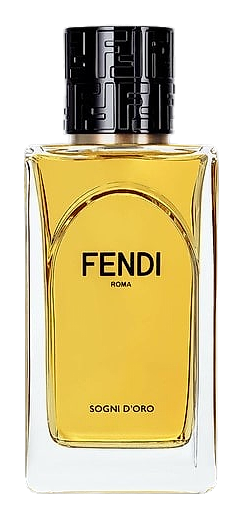
Sogni d'Oro grew out of Fendi's long romance with Italian materials, a house that has always treated leather and citrus as kindred ingredients. The fragrance is built around bergamot, iris, and leather, three pillars supporting one another rather than fighting for attention. Bergamot has long anchored Italian perfumery, and Fendi wanted the citrus to feel essential to the composition. The name, Italian for Golden Dreams, carries the weight of the juice itself. Early testers reportedly smelled the development samples and immediately asked if it could be bottled in larger formats, a request that spoke louder than any focus-group metric. The perfumer's task was to let each note breathe, to compose rather than to mask.
Once the bergamot anchor was locked, the perfumer built a quieter architecture underneath it, layers designed to soften the opening rather than compete with it. There is a deliberate sense of restraint in the formula, an editorial instinct that luxury whispers instead of shouts. The juice was tested repeatedly to make sure the citrus held up rather than vanishing. Each adjustment moved the bergamot closer to a rounder expression, a moment where brightness becomes warmth.
The evolution
Italian Bergamot had often been a supporting note in classic compositions, used to lift fougeres and colognes, but rarely asked to carry an entire scent on its own. Sogni d'Oro helped shift the conversation back toward luminous, skin-close fragrances built around a clear central ingredient rather than a dense stack of them. Critics described it as a study in restraint, and the cognoscenti tended to agree, with the fragrance earning a loyal following among collectors who prefer clarity over bombast. Today it is treated as a reference point for what a modern Italian citrus perfume can be when a fashion house commits fully to its home terroir. The lasting impression is one of freshness married to substance, a combination that feels rarer with each passing season.
Cultural impact
Sogni d'Oro arrived during a period when most luxury launches leaned on loud projection and trending sweetness, so its restraint read as a small cultural statement. Italian Bergamot has long been central to European perfumery, and Sogni d'Oro helped reintroduce it as a hero note rather than a side character. Italian publications framed it as part of a return to Mediterranean minimalism, a movement away from maximalism in both fashion and fragrance. The launch also reinforced Fendi's identity as a house that can translate Italian craft across categories, not just leather goods.