
The Story
Why it exists.
The beginning
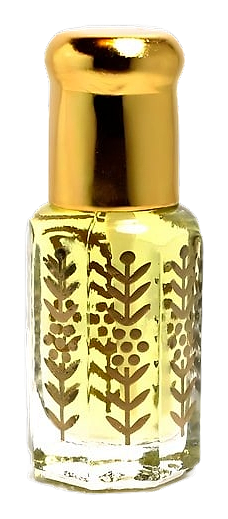
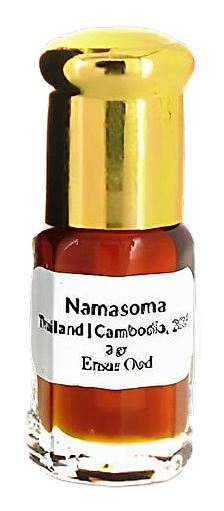
Namasoma sits inside Ensar Oud's organic line, the branch of the catalog where provenance becomes the point. The line reflects a house built around natural oud materials, a commitment that reads less like a pitch and more like a working method. Namasoma follows that logic to its most distilled conclusion. It strips the formula down to two regional ouds and lets them argue. The composition treats its raw material as something closer to sacred than commodity, and the restraint shows in every phase of wear. There's no floral cushion, no amber veil, no sweetness borrowed from gourmand territory. Just two oud voices, placed side by side, asked to hold the frame without support. The result is a scent that demands attention on its own terms.
What makes this formula worth attention is the restraint. Thai oud typically reads brighter, greener, with a fruity sharpness that some describe as almost tropical. Cambodian oud tends toward deeper barnyard territory, animalic and leathery, the kind of material that splits a room. Putting them together without a buffer is a bet that both voices can hold the frame. They do, but the balance is deliberate, not accidental. This is a composition for someone evaluating oud as oud, not as a note in a larger architecture. The two materials don't blend into mush or fight for dominance.
The evolution
On skin, the first ten minutes are deceptively quiet. The Thai material opens with a green brightness, almost vegetal, a sharpness that recalls bark and wet wood rather than sweetness. There's fruit underneath but it reads as fermentation rather than nectar, a tang that catches the nose off guard. By the twenty-minute mark, the Cambodian weight arrives and the whole thing tilts. The green recedes into something darker, more resinous. The animalic facets settle in without overwhelming, barnyard but contained, leathery in the way an old book is leathery rather than a new jacket. Three hours in, the two materials stop competing and start blending into a unified oud voice that smells like it came from a single tree. The drydown is where the composition earns its longevity reputation.
Cultural impact
Namasoma earns its reputation through what it refuses to do. No rose bridges the gap between raw material and a Western audience, no saffron warms the opening, no amber softens the edges. The formula stays where the material lives and lets the two regional ouds carry the entire weight of the composition. That kind of refusal is rare in oud work, where most releases build familiar structures around unfamiliar materials to ease the transition. Namasoma makes no such concession.