
The Story
Why it exists.
The beginning
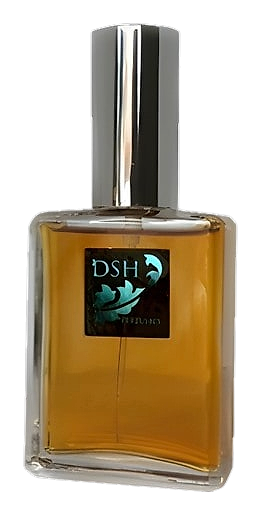
The name comes from the cosmographic concept found across cultures, the axis mundi is the sacred center where the earthly and celestial meet. A tree at the heart of a garden. A temple spire breaking cloud cover. Dawn Spencer Hurwitz wanted to build that into scent: something that lifts without leaving the ground. The brief was simple, a meditative incense design, resinous and deep, smoky in the way that ancient rituals are smoky. Unisex on purpose. Not because gender was the point, but because the idea of sacred space belongs to everyone. What emerged in 2016 was a fragrance that reads like an environment rather than a perfume, less about what you smell, more about what shifts when you wear it.
The structure is unusual for a mainstream fragrance because it treats incense as the foundation, not the finale. Many perfumes use smoky notes as a drydown punch, here, frankincense opens, breathes through the heart, and then reappears in the base alongside Arabian myrrh and labdanum, creating a loop. The civet doesn't perform animalic shock tactics; it anchors everything that came before it, giving the smoky accord a living warmth rather than a laboratory sterility. The fossilised amber and bakul attar are the quiet workhorses, present for hours without announcing themselves, the kind of materials that make a fragrance feel inevitable rather than constructed.
The evolution
Champaca leaf opens first, green, almost waxy, the scent of a leaf torn and held to the nose. Thirty seconds and the elemi resin and choya ral push through, raising the temperature. This is where the incense arrives: not a single note but a cloud of it, frankincense CO2 absolute carrying the most of it. The rose de mai absolute shows up around the ten-minute mark, threading through the smoke like a red thread, not sweet, just warm and present. The first hour is the most volatile. It shifts fast, layers trading places like clouds across a flat sky. By hour two, the iris starts to powder through, softening everything the resins built. The drydown is the long part. Arabian myrrh and labdanum hold the stage for hours, on some skins, this continues into the next morning as a skin-warm amber with a ghost of oud. The fossilised amber is the tell. That's the oldest thing in the bottle, and it stays longest.
Cultural impact
Axis Mundi belongs to a tradition of incense-forward compositions that emerged from American niche perfumery in the 2010s, scents that looked toward ritual and meditation rather than the commercial sweet-spicy templates dominating the market. What sets it apart is the absence of a traditional Western structure: no sharp citrus opening, no vanilla drydown comfort, no hedonistic sweetness. It's more demanding. And in that demand, it finds its audience, people who came to incense through meaning, not trend.