
The Story
Why it exists.
The beginning
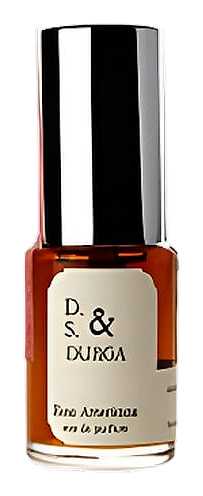
Rosa Americana arrived in 2008, early in the D.S. & Durga catalog. The fragrance was composed as part of the house's Feminine Collection I, and Moltz's instinct was to pull the camera back from the bloom itself and focus on what surrounds it, the air around the rose rather than the petal in your hand. Released as a 20 ml eau de parfum, the fragrance centers on a dewy, almost raw rose note that smells as if the flower were still attached to the stem, dew clinging to the leaves. The artemisia weaves through the composition with a green, slightly bitter thread, giving the rose a wild, untamed quality rather than a cultivated sweetness.
Two notes carry the entire composition, which is a bold choice and a deliberate one. Rose and artemisia are an unusual pairing because artemisia, the bitter wormwood herb, pulls in the opposite direction from the flower, adding a camphoraceous, almost medicinal chill. The result is a rose that smells like it grew in a garden rather than a perfumer's atelier, closer to a wild hedgerow than a bouquet.
The evolution
The first spray lands on artemisia, and it arrives sharp, herbal, slightly metallic, with a bitterness that reads more like wild sage than anything associated with flowers. Then the rose surfaces, something thinner and greener, a rose that still has its stem attached and the sap is still wet. The artemisia doesn't retreat so much as share the space, and the two settle into an herbal-floral equilibrium. The rose carries a cool, dewy quality at the opening, like petals unfolded in early morning shade, while the artemisia provides a bitter backbone that keeps the sweetness in check. As the scent warms against the skin, the floral facets bloom more fully, revealing a soft, almost powdery undertone beneath the initial green sharpness.
Cultural impact
Rosa Americana occupies a distinctive place in the D.S. & Durga catalog as one of the house's earliest releases, a two-note composition that has earned a devoted following among fragrance enthusiasts who appreciate unconventional floral work. The scent appeals to those drawn to rose interpretations that prioritize dryness and green bitterness over sweetness, a quality that sets it apart from mainstream rose perfumes built around Bulgarian or Turkish rose absolutes. It resonates with wearers who want their fragrance to evoke a specific place rather than an abstract concept of beauty, a rose that grows wild rather than one arranged in a vase.