
The Story
Why it exists.
The beginning
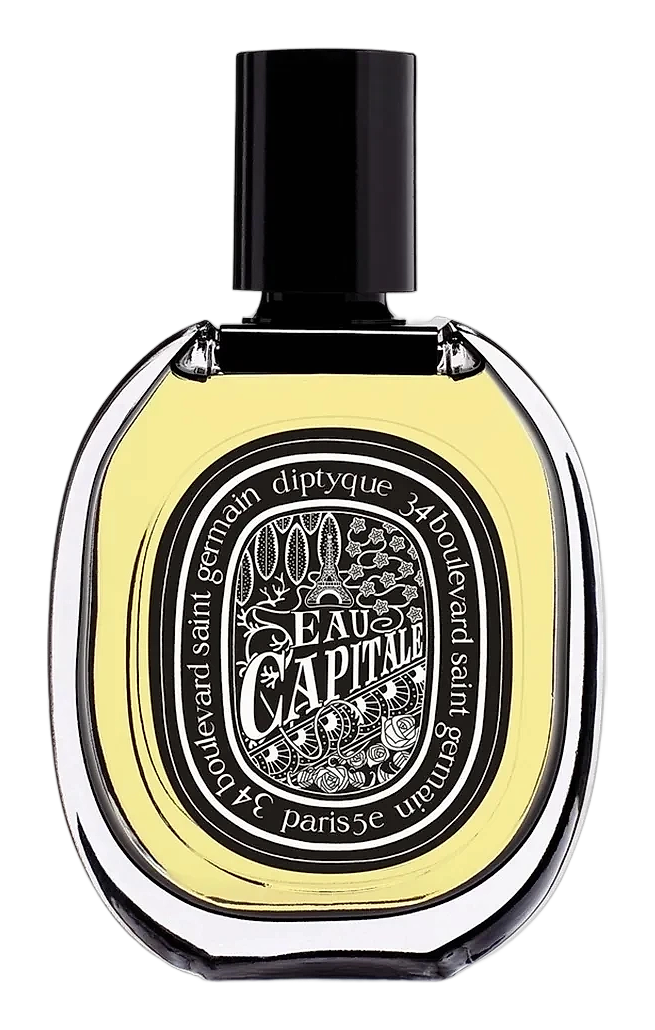
Diptyque's first proper chypre, composed by Olivier Pescheux, is built around patchouli rather than oakmoss. This gives the composition a contemporary register while preserving the chypre's essential tension: citrus over moss, freshness over depth. Bergamot opens the story, its bright citrus spark immediately evident. Pink peppercorn sharpens the brightness, adding a subtle spice that catches attention without overwhelming. Rose carries the middle, its floral presence soft and measured rather than loud or romantic. As the heart settles, patchouli becomes the dominant force, its earthy depth grounding everything that came before and anchoring the fragrance in that characteristic chypre warmth.
Chypres depend on a contrast: a bright, citrusy or fruity top notes meeting a deep, mossy-patchouli base. That tension is the genre's backbone. Pescheux leaned into this deliberately, but he made a choice that separates Eau Capitale from its vintage ancestors: the base is patchouli, not oakmoss. Oakmoss brings a certain austerity, a quiet severity. Patchouli brings warmth, a slight camphor edge, and a modernity that reads clean rather than heavy. The rose in the heart doesn't perform, it bridges. It softens the handoff from bright top to earthy base, keeping the composition coherent rather than choppy.
The evolution
Bergamot opens. Bright, immediate, citrus-sharp. Pink pepper arrives almost simultaneously, adding a subtle spice that cuts through the sweetness without taking over. For the first thirty minutes, the fragrance reads crisp and clean, like morning light through tall windows. The rose emerges slowly, not as a bloom but as a deepening. It doesn't smell like rose water or rose soap. It smells like the earth after rain, like rose stems still attached to the root. Moss creeps in here too, giving the heart a green, slightly dirty quality. By hour two, the bergamot has faded and the patchouli has taken over completely. This is where the fragrance lives longest, in its warm, woody, slightly camphorated drydown. The sillage drops from moderate to intimate, settling close to the skin like a second layer. By hour eight, it's skin scent. A quiet warmth, patchouli and faint rose, still present but no longer announcing itself.
Cultural impact
Eau Capitale found its audience among those who wanted the structural depth of a classic chypre but without the vintage weight. It occupies a specific position within the Diptyque lineup, offering a chypre that speaks to contemporary sensibilities while honoring its classical roots. The fragrance has become a reference point for those exploring the genre, providing an entryway that doesn't require familiarity with vintage formulations. Its accessibility stems from the way it captures chypre fundamentals, the interplay of citrus brightness and mossy depth, while remaining light enough for everyday wear.
The House
DiptyqueThree friends — a painter, an interior designer, and a theater director — opened a boutique on Paris's Boulevard Saint-Germain in 1961. What began as a fabric and décor shop became one of the most influential niche houses in perfumery. Diptyque's oval-label candles are iconic, but its fragrances deserve equal reverence: literary, textured compositions that smell like places rather than products.
The Creator
Olivier PescheuxWhile it's difficult to pinpoint a single, defining characteristic across all of Pescheux's work without a more extensive database, his style appears to favor a balanced approach. He doesn't seem to shy away from using a mix of synthetic and natural ingredients.