The Story
Why it exists.
The beginning
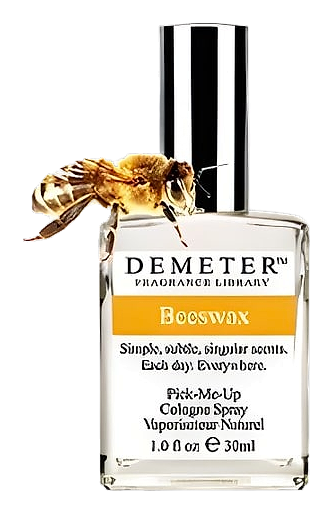
Beeswax started with a simple provocation: what happens when you take something ordinary, the smell of a working hive, pollen and heat and wax building comb, and make it the entire point? Demeter built its catalog on this idea. Not interpretation, not abstraction. The real thing, in a bottle you can spray. For Beeswax, the brief was straightforward enough. Capture the intoxicating quality of wax, honey, and flower pollens. Translate the kind of summer day that exists far from city noise, hot, still, sweet-smelling air. Breathe deeply, the brand suggests. Then repeat. This fragrance is that instruction made liquid.
What makes Beeswax work is its refusal to compromise. Beeswax as a material is dense, slightly animalic, resinous in a way that can tip into furniture polish if you're not careful. Most fragrances that feature it soften those edges with vanillas or musks, turning it into something pleasant and diffuse. Demeter went the other direction. The wax stays waxy. The honey stays sweet but gains structure from the beeswax underneath. The florals are present, more pollen than petal, but they don't perform cover-up duty. This is the fragrance for someone who looked at a full note pyramid and said 'what if we just did one thing, really well?'
The evolution
The opening arrives warm and immediate. That beeswax quality hits first, not sharp, but present, a waxy sweetness that fills the nose. Within minutes the honey joins, not flying solo but grounded by the wax beneath it. Neither note dominates. They build together. The floral element announces itself quietly around the 30-minute mark, flower pollen, not a bouquet, dust rather than petals. By the time you hit the two-hour mark, the composition has shifted. The honey softens. The beeswax takes on an almost skin-like quality, warm and close, settling into the wearer's chemistry rather than sitting on top of it. The drydown, four to six hours in on most skin, is intimate. A soft amber warmth that doesn't project far but lingers. The kind of scent someone notices only when they're close enough to touch.
Cultural impact
Beeswax occupies an unusual position in the fragrance landscape. It's not trying to smell expensive, nor is it attempting to replicate nature perfectly. It's something rarer, a scent that simply is what it is. Those who love it tend to love it specifically, not because it reminds them of something else but because the material itself, in this form, works for them. The fragrance finds its audience through specificity rather than broad appeal, which is perhaps the most Demeter thing about it.