The Story
Why it exists.
The beginning
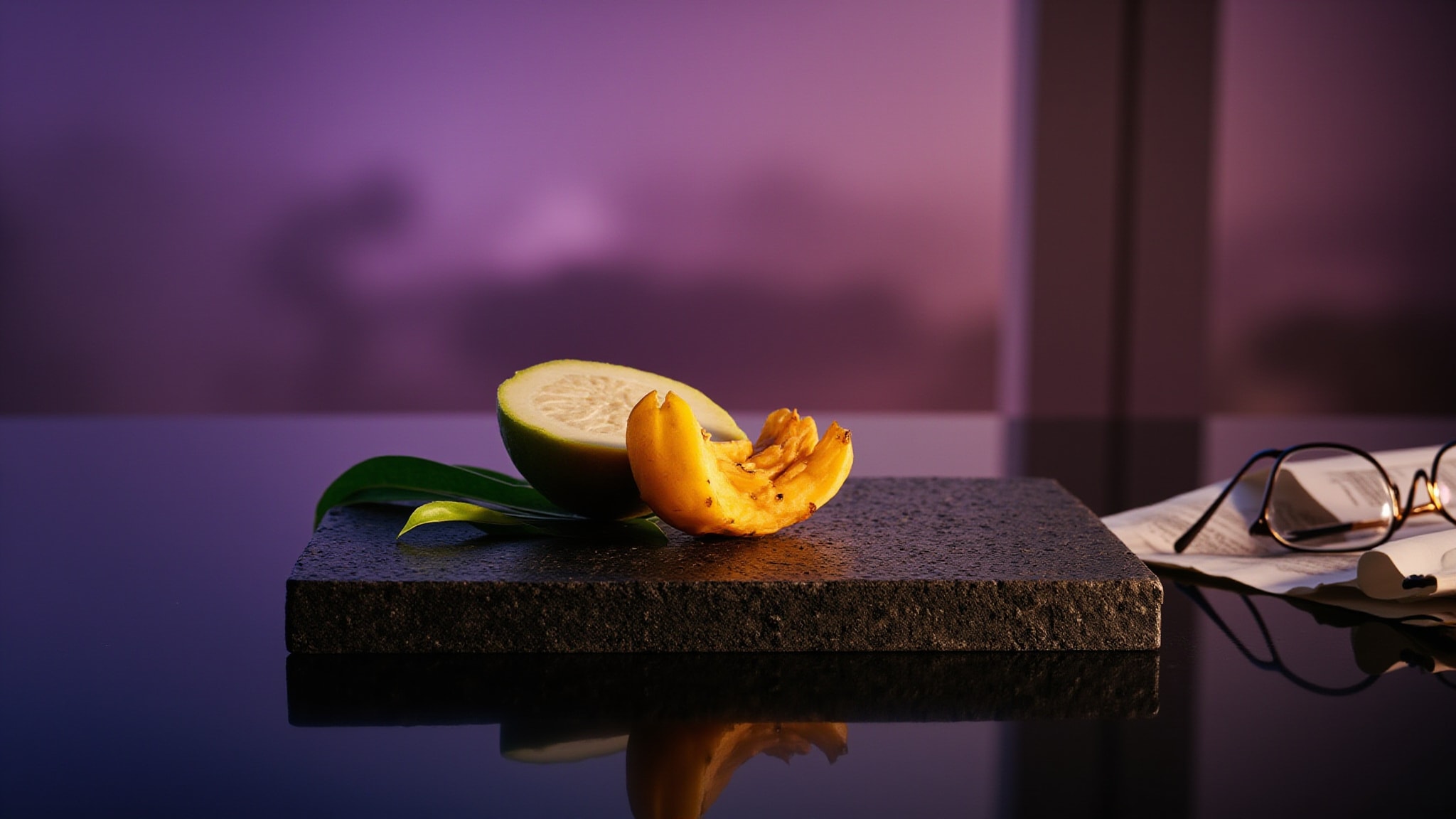
The composition earns its title before the first spritz. The choice of pandanus, ti leaf, and hala fruit points to a deliberate Pacific attention, a place where the air carries sweetness from flowering plants and the greens taste almost edible. This isn't tropical as beach umbrella. It's tropical as living thing, overgrown and a little feral. Pandanus, the screwpine whose leaves scent everything from Thai desserts to Pacific Island kitchens, opens with a sticky, almost candy-like warmth that sits somewhere between maple and toasted coconut. Ti leaf contributes its unmistakable green bite, more vegetable than botanical, the kind of accord that makes the whole composition feel rooted in soil rather than suspended in air.
What's unusual here is the structural balance between food-adjacent sweetness and floral almost-decadence. Pandanus carries a custard-like warmth that reads as dessert before any sugar is formally introduced. Honeybush adds a tea-toned herbal lift that keeps the syrup from going flat. Tuberose is the muscle, the part that turns a gentle tropical into something with presence, and ebony at the base gives the composition wood-smoke gravity. The pandanus-to-tuberose conversation is what gives Hala Lani its signature tension.
The evolution
The first 15 minutes are the pandanus pushing forward, almost chewy, with the ti leaf adding green snap underneath. The honeybush shows up early too, doing what tea does: pulling the sweetness away from the cloying edge. Then something shifts around the 30-minute mark. The tuberose arrives, full-bodied and creamy, and it does what tuberose always does, occupies every square inch. The fruity notes brush through, not identifiable as any one fruit, more like the concept of fruit. The ti leaf bows out quietly. By hour two, the composition has arrived at its adult register: tuberose still present, but ebony and musk taking over the architecture. The vanilla doesn't shout. It hums. The musk at the base stays skin-soft and intimate for hours, lingering in close radius rather than projecting outward, the kind of drydown that rewards the wearer more than anyone standing nearby.
Cultural impact
Hala Lani draws directly from Pacific and Polynesian botanical traditions, a deliberate framing that places it in conversation with regional perfumery rather than Western tropical tropes. The composition centers on pandanus, ti leaf, and hala fruit, plants that carry deep cultural significance across Hawaii, Tahiti, Samoa, and broader Polynesia. Pandanus in particular appears across Pacific Island cultures in food, weaving, thatching, and ceremony. Its inclusion in a Western indie fragrance marks a shift toward sourcing olfactory ideas from traditions that mainstream perfumery has historically overlooked or flattened.