
The Story
Why it exists.
The beginning
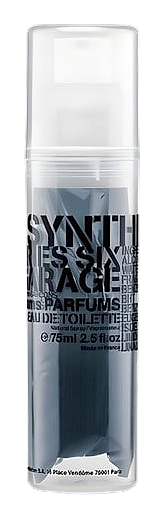
Comme des Garçons launched Series 6 Synthetic in 2004 as an act of war against natural ingredients. The brief was simple: find beauty in places perfumery had never looked. Tar doesn't evoke a flower, a forest, or a fantasy. It captures what a city actually smells like, hot bitumen, exhaust gases, cigarette smoke drifting from an open window. The perfumer, Nathalie Feisthauer, wasn't recreating nature. She was translating it.
What makes Tar unusual is the contradiction at its center. The top notes, kerosene, bergamot, read like a car workshop and a Mediterranean grove had a one-night stand. The aldehydes add a sharp, almost clinical edge that keeps everything grounded in something synthetic. This isn't pretending to be natural. It's celebrating the man-made.
The evolution
The opening hits like standing too close to a running engine. Kerosene cuts first, sharp and acrid, before bergamot arrives to lighten it. Not sweeten, lighten. The citrus reads cool, almost medicinal against the fuel. Within 20 minutes, the aldehydes soften and leather emerges. Not the polished leather of a briefcase, the warm, slightly animalic leather of a jacket worn for years. The heart holds for two to three hours, styrax and opoponax adding a resinous sweetness that tempers the asphalt. Then vetiver takes over. Dry, smoky, with a ghost of tar that clings to fabric long after the skin has moved on. On clothes, this fragrance outlives the day.
Cultural impact
Tar belongs to a small group of fragrances that function as provocation rather than decoration. Released in 2004 alongside its sister scent Garage, it exists in the tradition of CdG anti-perfumes, compositions that ask what perfume is actually for. The transparent bottle showing a garbage bag wasn't irony. It was the point.