The Story
Why it exists.
The beginning
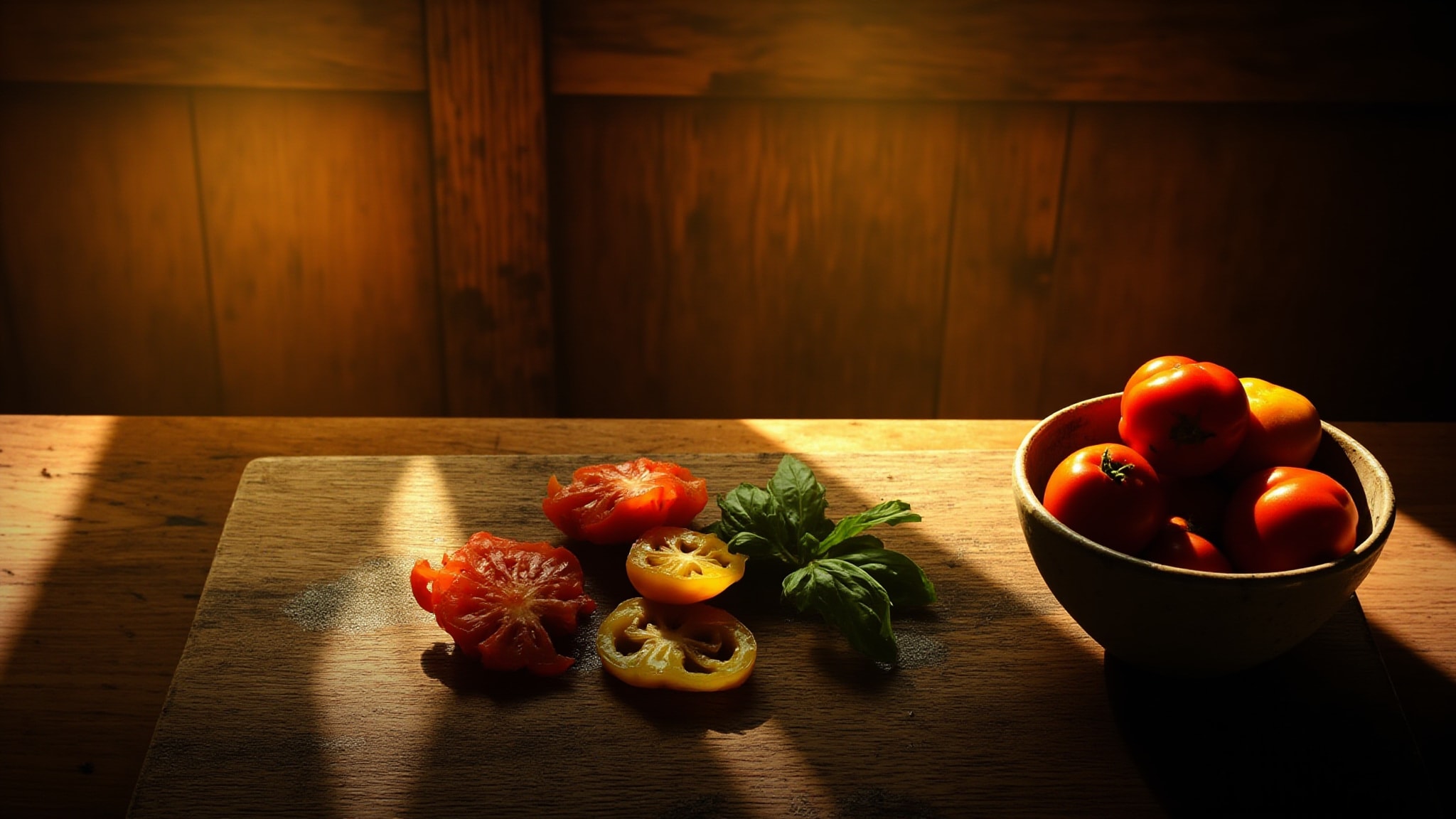
Christopher Brosius built CB I Hate Perfume around a radical idea: fragrance as autobiography. Each bottle is less a product than a document, a recorded moment from a life lived in smell. In The Summer Kitchen takes that premise literally. The name refers to an actual room: a working kitchen in summer, herbs drying on hooks, vegetables waiting on the counter, the last light of a clear evening pressing through the window. Above it all, old wooden rafters darkened by years of steam and heat. Brosius wanted to capture the entire scene, not as metaphor, but as olfactory fact.
What makes In The Summer Kitchen unusual in the CB I Hate Perfume catalog is the literalism. Brosius works with green notes not as a category but as specific materials, the kind that smell like actual cut herbs and garden vegetables, not abstractions of freshness. The smoked rafters in the drydown aren't a generic woody base. They reference the particular aroma of old wood that has absorbed years of cooking: heat, moisture, spice, fat. That specificity is the point. Brosius doesn't want you to experience a suggestion of summer. He wants you to experience summer, arrived at through scent.
The evolution
The opening arrives immediately. Green, wet, alive, like cutting basil and tomato stems on a board, moisture still on your fingers. This is not synthetic fresh. It has weight and texture, the way real plant matter does. Within the first hour, the herbs settle into the foreground. The vegetables recede slightly but don't disappear, they're still there, part of the room's atmosphere rather than its main event. The woody notes begin their slow emergence around the second hour. Not dramatic. Not announced. Just the rafters making their presence known above everything else. By the third hour, the green has mellowed into something drier, warmer. The smoked wood becomes the room itself. On skin, expect four to six hours. On fabric, it lingers into the next day, faint but unmistakable, like walking into a kitchen that someone cooked in hours ago.
Cultural impact
In The Summer Kitchen arrived in 2004 as part of a catalog that rejected the conventions of commercial fragrance entirely. Rather than positioning itself within a market segment, the house operated as a kind of olfactory memoir, each release a recorded memory, specific and uncompromising. Within niche perfumery, Brosius occupies a particular corner: the anti-perfume perfume, built for the person who finds more interest in a kitchen garden than a bouquet.