The Story
Why it exists.
The beginning
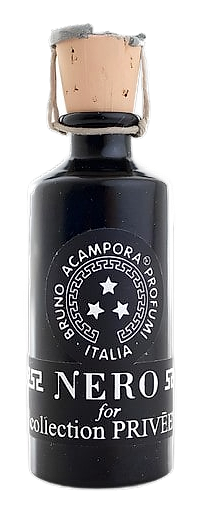
Nero arrived in 2011 as part of a collaboration with fashion house Collection Privee. The brief was simple: create two fragrances that were exact opposites. Bianco would be light, airy, crystalline. Nero would be dark. Bruno Acampora, the Neapolitan perfumer who built his house on Mediterranean warmth and artistic experimentation, delivered something that felt less like perfume and more like a statement. The name itself says everything, Nero, the Italian word for black, carries weight. It was designed for a sophisticated clientele, for those who wanted something precious and original, something that refused to blend in.
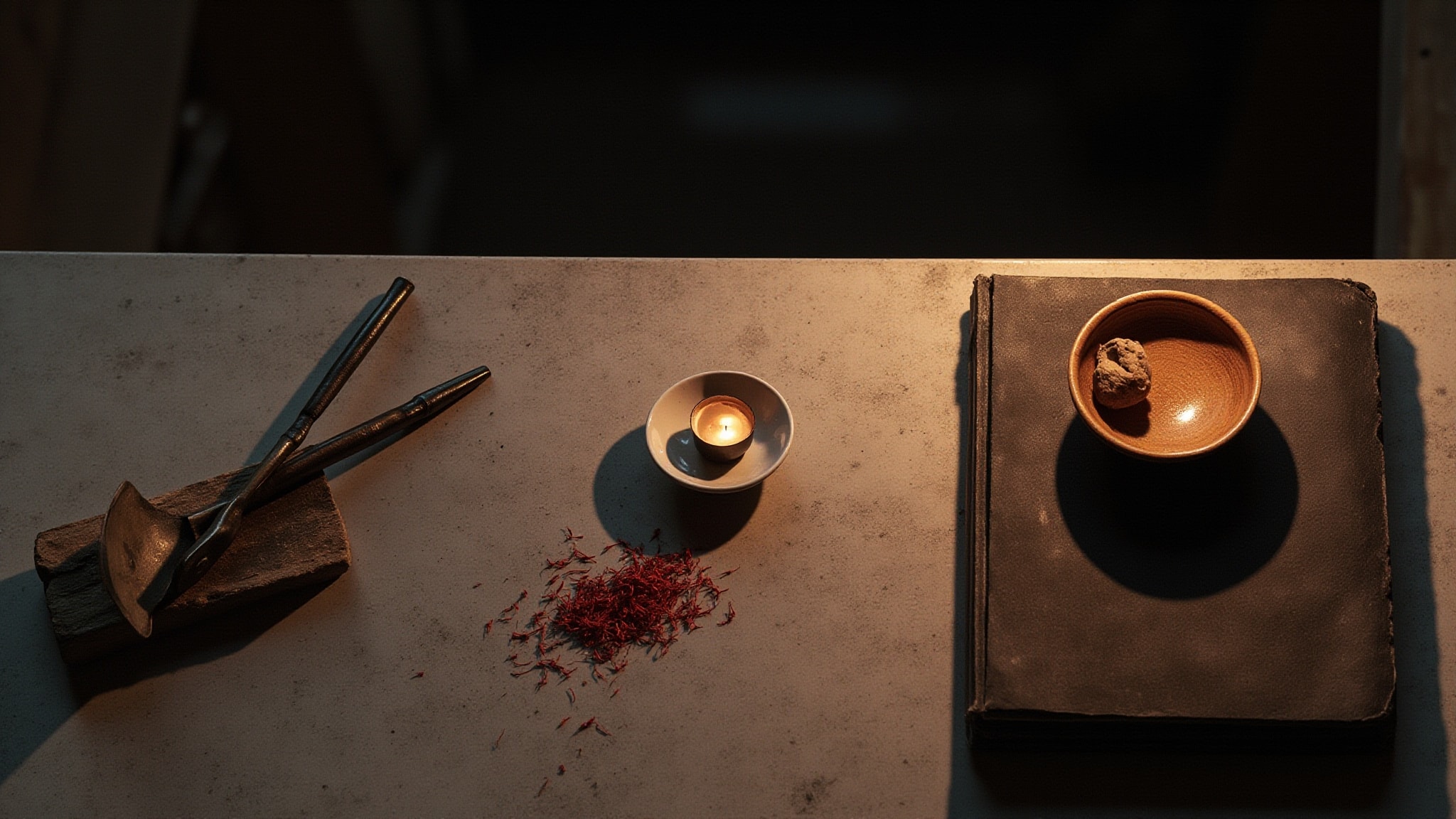
The structure is deliberately confrontational. Instead of the soft Mediterranean florals Acampora sometimes favors, Nero opens with saffron's resinous intensity alongside citrus fruits that cut rather than refresh. The heart pairs Virginia cedar with patchouli, two materials that share an earthy, grounded quality but diverge in texture: cedar is dry and clean, patchouli is thick and dark. The base adds sandalwood's creamy warmth, amber's resinous glow, and musk for skin proximity. The result is woody without being forest-like, oriental without being sweet, warm without being soft. It's the kind of composition that demands attention rather than requesting it.
The evolution
The opening announces itself without apology. Saffron and citrus arrive together, bright, sharp, almost astringent, then the citrus fades faster than expected while the saffron lingers, giving the composition a spicy warmth that persists through the drydown. Cedar and patchouli arrive around the fifteen-minute mark and take over the narrative. The cedar keeps things structured, almost architectural, while patchouli adds depth and darkness, turning the fragrance from something that opened with brightness into something that now reads as dense and low. By the second hour, sandalwood begins to soften the cedar's edges, and amber introduces a warm glow beneath the surface. The drydown is where Nero earns its reputation. Sandalwood, amber, and musk build a base that clings to skin for hours, well into double figures on most people. The next morning, the amber and musk remain, faint but present, like warmth left behind in an empty room.
Cultural impact
Released in 2011 as part of a collaboration with Collection Privee, Nero stands as the darker counterpart to the lighter Bianco. The pairing represents an exploration of opposites, two identities, two temperatures, one house. Among Bruno Acampora's offerings, Nero sits at the more assertive end of the spectrum, appealing to those drawn to its bold character rather than its refinement. The 2011 launch placed it among the era's more challenging woody orientals.