The Story
Why it exists.
The beginning
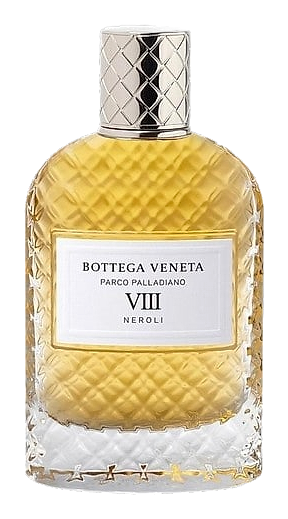
The eighth entry in Bottega Veneta's Parco Palladiano series takes its name from Palladian Park in Vicenza, the city where the house was founded in 1966. The concept mirrors the collection's guiding principle: each fragrance translates a specific place in the Veneto region into scent. Neroli is a classic perfumery material, but the brand wanted something with more complexity than a straightforward floral. Mylène Alran built the composition around an orange orchard in warm afternoon light, where the whole tree matters, not just the blossom. That meant including the green, bitter parts alongside the delicate ones. Petitgrain, from the leaf and stem, brings a sharp, herbaceous quality that makes the neroli feel grounded rather than floaty. Orange blossom adds richness. The result is a fragrance that smells like standing inside an orange grove, sun-warmed bark and all.
Petitgrain is derived from the leaves and stems of the citrus tree, the same tree that gives us neroli from its blossom and orange from its fruit. Where neroli is delicate and waxy, petitgrain is green, bitter, and almost camphoraceous. In this composition, that difference is the point. The petitgrain opens sharp and aromatic, like crushed stems rather than citrus peel. Then the neroli arrives, creamy, indolic, intoxicating, and the orange blossom adds a honeyed richness underneath. Together, they form a white floral heart that is luminous but not precious. The woody base keeps everything grounded, clean, and slightly soapy. This is not a simple floral.
The evolution
Petitgrain opens with a green, aromatic punch, bitter stems and crushed leaves, more herb than citrus. The scent moves fast into neroli and orange blossom, the petals arriving with a creamy, almost indolic bloom that feels sun-warmed and intimate. There is a honeyed quality underneath the florals, but the green notes keep it fresh, never sweet. The drydown is clean and woody, white musks and cedar that give a polished, skin-close finish. Hours later, traces of it remain on fabric: a quiet, clean presence that speaks of the tree's bark and petals rather than its fruit.
Cultural impact
The fragrance appeals to those who want a bold, clear neroli rather than a soft, nuanced one. There is a soapy quality that divides opinion, some find it clean and sophisticated, others medicinal. But for those who connect with it, the fragrance offers a statement of confidence in restraint.