
The Story
Why it exists.
The beginning
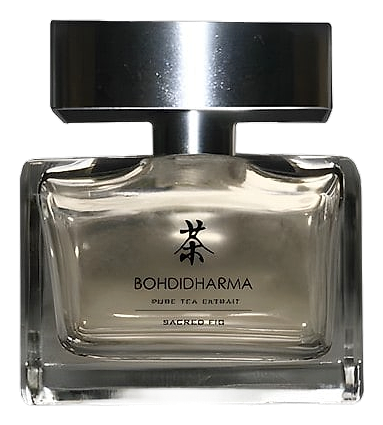
Black Lapsang takes its name literally and specifically: lapsang souchong, the Chinese tea smoked over pine fires, whose flavor profile sits between campfire and cured leaf. The composition builds around that single material, letting it carry the personality rather than hide it. Boadi constructed the fragrance so the tea is the lead voice, not a background whisper, and every supporting element exists to frame its smoky character. The aromatic threads wrapped around the smoke, the cedar, the mate, all serve to amplify rather than obscure. It's an aromatic composition where the green, leafy freshness of tea meets the deep resinous warmth of wood fire, a study in contrasts that holds together because nothing is fighting for attention.
What makes the structure unusual is the restraint. Black Lapsang uses birch tar and cade, paired with the green, slightly bitter lift of mate and the clean resinous pull of Virginia cedar. The cedar does the structural work; the tea gives it character; the smoke at the base gives it memory. It's an aromatic composition wearing a leather jacket, and that contrast, green tea against fireplace, is the whole game.
The evolution
The first fifteen minutes belong to mate: dry, leafy, almost herbal-tea-bag clarity, with a faint grassy bitterness that reads as fresh rather than stale. Then the smoke arrives, and it arrives fast. Birch tar brings the bonfire, cade brings the dry medicinal resin, and suddenly the tea isn't in a teacup anymore, it's in a cabin with the windows closed. By the second hour, the cedar has settled into the base, giving the smoke something woody and architectural to lean against. What surprises most wearers is the drydown: the fire burns down, but the tar stays. Hours later, close to skin, you get the scent of cooled embers mixed with old wood, a ghost of the tea still detectable underneath. The progression moves through distinct phases, each one legible, each one building on the last.
Cultural impact
Black Lapsang taps into a quiet corner of tea culture where smoked leaves have long been appreciated for their bold character. Lapsang souchong, the Chinese black tea that gives this fragrance its smoky spine, carries a distinctive pine-fire character that distinguishes it from other smoked or fired teas. Bohdidharma leans into that smoky heritage, treating birch tar less as a novelty and more as a serious material. The composition uses birch tar as a foundational smoky element, letting it anchor the lapsang character while mate and Virginia cedar provide lift and structure.