The Story
Why it exists.
The beginning
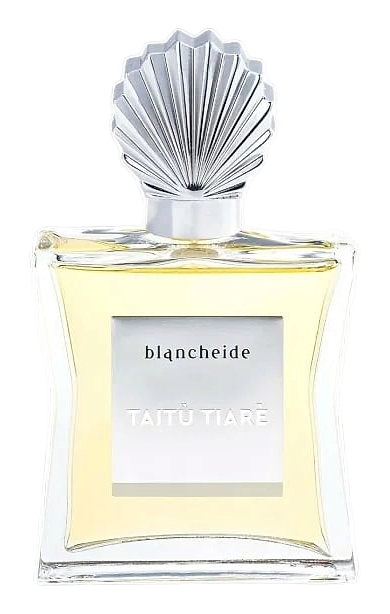
Taitutiaré is named for the tiare, the gardenia at the center of Tahitian life. The flower gets tucked behind ears on the beach, a gesture as familiar as the ocean itself. Blancheide handed it to a perfumer and built the composition around a single tiare at the top, then layered in the supporting cast: ylang-ylang, vanilla, and a generous pour of tuberose for the body heat underneath. The result is an eau de parfum with above-average projection, a scent that announces itself clearly when someone gets within range. What you smell is the flower itself, not an abstraction of it. Rubis's approach strips away the usual tropical perfumery shortcuts, the fruity top notes, the synthetic sweetness, and lets the raw floral materials carry the entire weight of the composition.
What separates Taitutiaré is the deliberate commitment to the tuberose. Taitutiaré lets it stay rather than using it as a fleeting accent. The ylang-ylang adds a coconut-adjacent warmth, the bourbon vanilla brings a sugary edge, but the tuberose is the architecture, the skeleton underneath everything else. Pairing it with amber and benzoin in the base is the other interesting move. Those two resins soften the floral into something almost edible, a creamy density where the sweetness reads more like confection than fruit.
The evolution
On skin, Taitutiaré opens with a burst of tiare that's almost too immediate, like someone crushed the flower between their fingers an inch from your nose. The sweetness is real but not cloying. The ylang-ylang rises from underneath and the whole thing takes on a coconutty, slightly suntan-oiled warmth. The bourbon vanilla shows up early too, more as a sweetness amplifier than a standalone note. Eventually the tuberose takes over the heart completely. It's that carnal, almost fleshy white floral, the kind that smells less like a flower and more like warm skin after sun. Anyone who's been ambivalent about tuberose should know this one doesn't apologize for it. The drydown is where the base earns its keep. The amber and benzoin blend into a soft, resinous cream that smells like vanilla extract left in a wooden drawer.
Cultural impact
Taitutiaré sits in an interesting corner of the fragrance world. It reads tropical at first glance, which usually signals vacation-shelf beach scents, but the composition has a density and seriousness that pushes past that initial read. The tuberose weight gives it gravity, and the resinous base keeps it grounded long after the bright top notes have faded. It's a release that treats tropical perfumery as a legitimate artistic territory rather than a novelty, proof that the category can support something complex and worth revisiting.