The Story
Why it exists.
The beginning
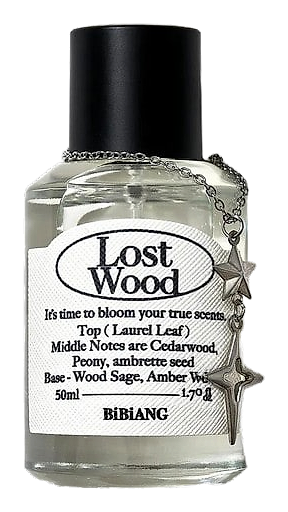
Lost Wood arrived in 2023, a composition from BiBiANG that reads as a fragment of something lost and found again. The name carries that quality of half-remembered imagery, an object or a place recalled from the corner of memory, and the scent leans into the green, herbal register of a forest path rather than the polished warmth most woody fragrances aim for. That choice gives the composition an almost wilder character, closer to crushed leaves underfoot and the cool air that follows a rain shower than to the smooth sandalwood-vanilla direction woody fragrances often pursue. You notice it immediately on skin, where the opening moves quickly through its top notes before settling into something denser and more rooted.
What makes this composition interesting is the unusual pairing of bay leaf at the top with ambrette at the heart. Bay leaf in fragrance tends to read as culinary or medicinal, sharp and green, and it brings a slightly bitter, peppery edge that you don't often find in woody-aromatic compositions. The note has a savoury quality, almost like walking past a kitchen garden where herbs have been left to dry on a wooden rack. Ambrette seed carries a different character entirely, musky, almost skin-like softness that veers floral when it opens up.
The evolution
The opening hits fast and clean. Bay leaf arrives almost immediately, sharp and herbal, with a green bite that reads somewhere between crushed leaves and dried spice. It stays prominent for the first 20-30 minutes, carrying a faint peppery coolness that makes the air around you feel colder than it is. Around the 30-minute mark, the bay leaf begins to soften and ambrette steps forward, bringing a powdery, musky warmth that shifts the composition from kitchen-garden to something closer to skin. Cedarwood runs underneath the whole arc, dry and structural, never loud but always present. By the 2-hour mark, the heart has settled into a quiet blend of ambrette and cedar, the green sharpness mostly gone, replaced by something soft and slightly floral. The drydown is where amber and wood sage take over, earthy and faintly salty, with a gentle warmth that lingers close to the skin for the remaining hours. On a sweater the next morning, it reads as a faint, musky wood with a trace of sage, a shadow of what it was the day before but still distinctly itself.
Cultural impact
Within BiBiANG's own catalogue, Lost Wood reads as one of the greener, more aromatic entries, sitting closer to Walnut Creek Green in mood than to the warmer compositions the brand has explored in later releases. That positioning gives it a distinct character within the line, one that favours herbal sharpness and musky warmth over the smoother, sweeter directions woody fragrances often take. The bay leaf and ambrette pairing is unusual enough to stand out, and it gives the composition a kitchen-garden quality that feels specific and intentional rather than generic.