The Story
Why it exists.
The beginning
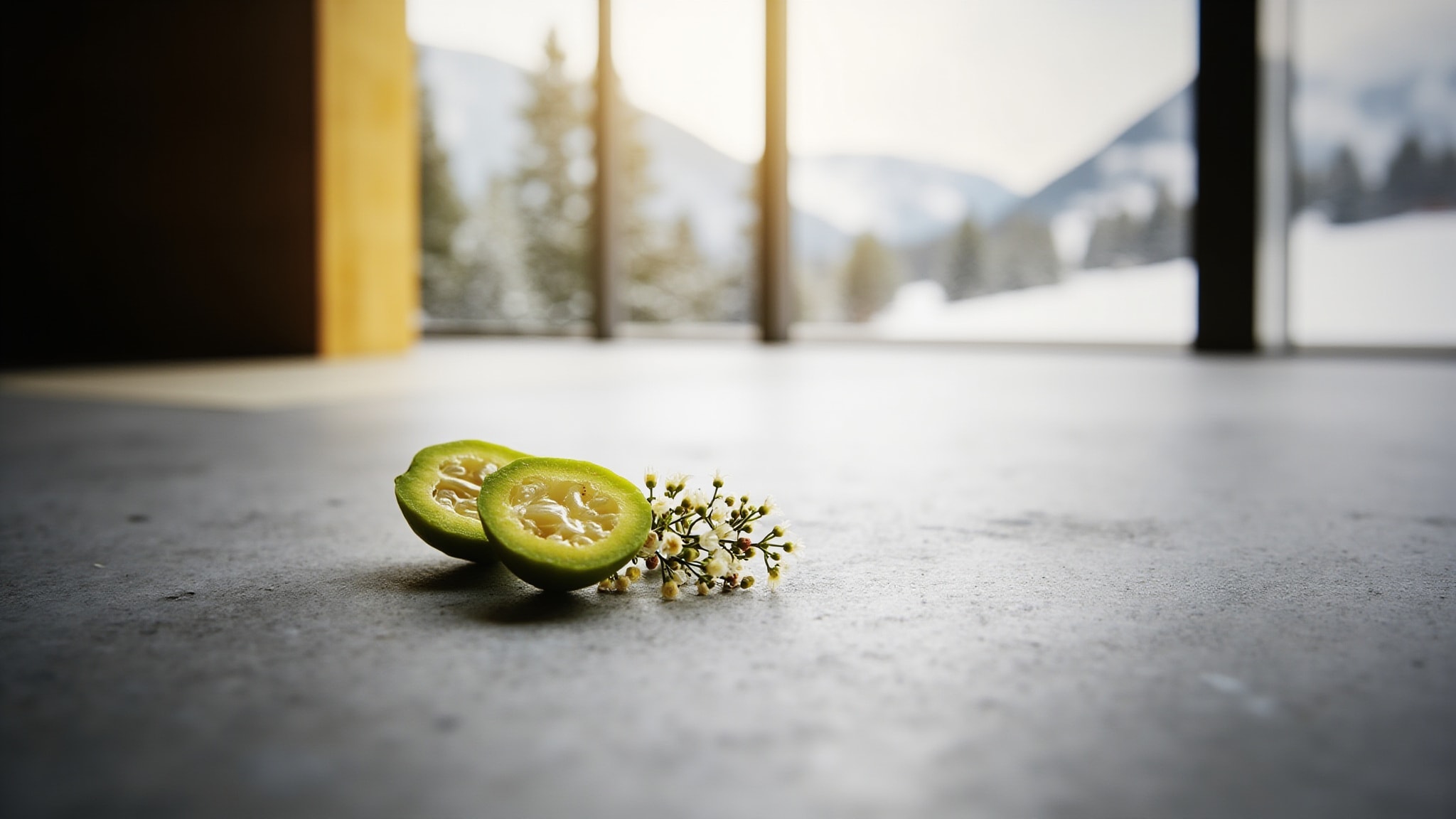
Bez i Agrest. Black elder and gooseberry. Alan Balewski named this 2020 composition for its two defining ingredients, a gesture that feels more like a botanical field note than marketing copy. The Polish-language title keeps the fragrance anchored to its Slavic landscape: elderberries growing along hedgerows, gooseberries wild in the undergrowth. The scent opens with the tart brightness of gooseberry, the kind of sharp, green acidity that makes your mouth water. Elderflower follows, bringing a honeyed sweetness that softens that initial bite, creating a tension between freshness and warmth that feels utterly natural.
Elderflower rarely leads a composition. Jasmine, rose, tuberose, these are the heart notes that get attention. Elderflower sits quieter, sweeter, with a specific honeyed-floral character that reads more like a memory than a material. Using it as the dominant middle note is a deliberate choice: it asks the wearer to slow down and lean in. Gooseberry, by contrast, is green and tart, sharp enough to cut through sweetness before it becomes saccharine. The white wine note is the unexpected structural move. Not grape as fruit, but wine as texture: a slight warmth, a fermented undertone that keeps the composition from reading purely fresh.
The evolution
Gooseberry opens sharp and green, immediately identifiable as the tart little berry it is, before the sweetness has time to arrive. Violet follows within minutes, dusting the sharpness with powder. The white wine note appears as warmth more than smell, a sense of something fermented sitting just beneath the surface. The transition to heart is smooth: elderflower takes over without fanfare, its honeyed sweetness now dominant, while lilac adds a fresher, greener floral facet that prevents the composition from becoming heavy. This phase feels expansive and gentle, the sweetness continuously evolving as the florals blend and shift. The base arrives quietly: honey first, then white musk keeping everything close to the skin, then styrax, a resin with a slightly sweet, balsamic character that adds depth without projection.
Cultural impact
Elderflower & Gooseberry occupies a specific niche: the green-fruity-floral genre, but with an unusual ingredient focus that sets it apart from mainstream fruity florals. The elderflower heart note is uncommon enough to make the composition distinctive without sacrificing wearability. Community reception positions it as a spring and summer fragrance primarily, though its honeyed warmth extends into cooler months, a versatility that reflects its balanced structure. Compared to similar releases in the niche market, Bale's composition opts for restraint over projection.
The House
Bale PerfumesBale Perfumes is the creative endeavor of independent perfumer Alan Balewski, who operates BALE Independent Perfumery Practice from a dedicated perfume laboratory. The brand crafts niche, artisan fine fragrances that draw from Slavic cultural imagery and natural landscapes. Notable releases include Mare Goticum and Hispaniola (both 2024), alongside earlier works such as Elderflower & Gooseberry (2020), Trial of the Grasses (2020), The White Flame (2020), The Swallow (2021), and Eridan (2024). The collection features Polish-language titles for several key compositions, including Próba Traw, Jaskółka, and Biały Płomień, reflecting Balewski's connection to Polish heritage and literary traditions. As an independent house, Bale Perfumes operates outside the structure of larger fragrance houses, allowing for experimental approaches to scent composition and limited production runs.
The Creator
Alan BalewskiBased on the artisan ethos and limited output, Balewski appears to favor deliberate, considered compositions over rapid turnover. His ISIPCA training provided classical foundations in raw material handling and accord construction, which he likely blends with more intuitive, ex…