The Story
Why it exists.
The beginning
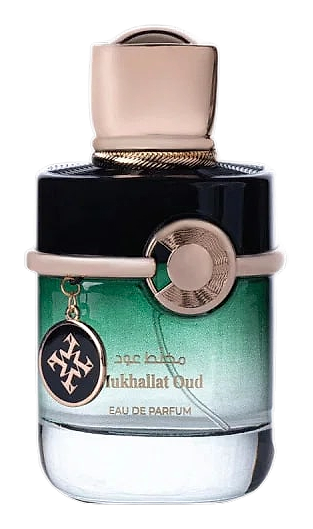
Mukhallat Oud enters the world as a statement about layering. In Arabic perfumery, mukhallat refers to a blend, traditionally a base of oud oil stretched with other materials to make something wearable, personal, shared. Azha built this fragrance within that tradition: taking oud, the material that defines Arabian perfumery, and pairing it with aldehydes, a bridge between East and West, old-world luxury and mid-century glamour. The result doesn't feel like a compromise. It feels like translation.
The aldehydes are the unexpected choice here. In classical Western perfumery, they represent Chanel No.5's legacy, the soapy, abstract brightness that makes florals feel elevated and timeless. In this composition, they do something different: they lift the warm spices, keep saffron and carnation from becoming too heavy, and give the heart a kind of illuminated quality. The orris root in the heart amplifies this, powdery, violet-like, slightly metallic, creating a middle passage that smells neither purely Eastern nor purely Western. That tension is the point.
The evolution
The aldehydes arrive first, bright, almost fizzy, with a metallic shimmer that clears the air. Thirty seconds in, the saffron and bergamot arrive together: the bergamot adds citrus clarity while the saffron adds warmth, something resinous and slightly animal. The heart takes its time. Carnation unfolds slowly, bringing clove-like spice, and jasmine softens everything into a floral warmth that feels less like a garden and more like the idea of one. Then the base: moss first, earthy and green, slightly damp. Ambergris follows, salt, warmth, a subtle animalic sweetness that anchors the aldehydic brightness without killing it. Musk keeps everything close to the skin. The aldehydes never fully disappear. They thread through the drydown like a memory of the opening, keeping the whole composition coherent. On skin, expect 4-6 hours of presence, intimate but persistent.
Cultural impact
Mukhallat Oud occupies an interesting position in the contemporary oud landscape: it doesn't lead with oud. The aldehydes and carnation take the foreground, making this more approachable for those new to oriental perfumery while still offering the depth and warmth that defines the category. It sits comfortably between classical aldehydic florals and modern oud compositions, appealing to wearers who want complexity without heaviness.