
The Story
Why it exists.
The beginning
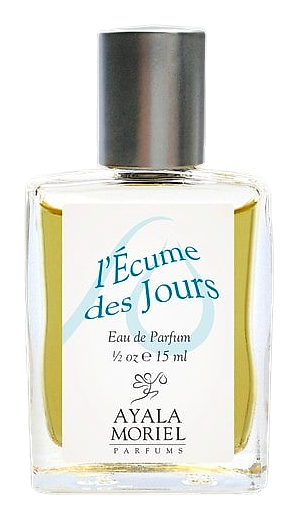
l'Écume des Jours was born from Ayala Moriel's deep affection for Boris Vian's novel of the same name. The story's central image, of love and tenderness rendered as something as delicate and ephemeral as the foam on a glass, struck a chord she couldn't shake. Moriel wanted to translate that fragile, frothy tenderness into scent, building a fragrance that could capture the airy fizz of bubbles rising and dissolving, and the slow ache of something beautiful slipping away, all at once. The result is a perfume that doesn't illustrate the novel so much as echoes its central ache, offering a wearable impression of lightness on the verge of vanishing.
Working from her studio, Moriel approached the brief like a novelist, sketching moods and scenes before selecting materials. She chose notes that could evoke both effervescence and intimacy, pairing the cold sparkle of green pepper with the creamy softness of sandalwood and the vegetal hush of seaweed, oak moss, and tree moss. The result is less an aquatic in the conventional sense and more an impressionist portrait of bubbles rising, settling, and dissolving against warm skin, every phase echoing a different page of Vian's melancholy, jazz-soaked love letter.
The evolution
From the very first spray, l'Écume des Jours opens with a cool, almost culinary brightness: a tart squeeze of cassis cut by the peppery, slightly bitter flicker of boronia and green pepper that tingles on the skin like biting into a chilled cocktail. The opening is brisk and slightly green, but it is quickly tempered by a creamy softness that hints at the skin beneath, suggesting not just cleanliness but closeness. As the top notes fade, the heart unfolds with a quiet, dewy floralcy, imagine lotus petals floating on a still pond, blurred by steam and a faint haze of seaweed and moss. There is nothing indolic or heavy here; the flowers stay translucent, almost weightless, as if painted in watercolor. Over the next hour or two, the composition gently descends into its drydown: a soft, milky haze of sandalwood that reads less like cologne and more like the scent of warm skin after a bath.
Cultural impact
L'Écume des Jours exists at a quiet intersection of literature and scent, drawing on Boris Vian's novel of the same name as its emotional wellspring. Moriel's choice to render a written story into a wearable form invites a particular kind of attention, one where a fragrance is asked to carry mood, atmosphere, and the slow drift of a narrative arc rather than a conventional top-heart-base marketing pitch. The collaboration speaks to a reader's sensibility: someone who values the way a scent can summon an entire interior world without needing to explain itself.