
The Story
Why it exists.
The beginning
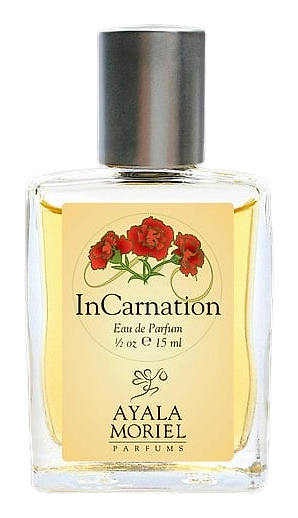
InCarnation arrived in 2008 from Ayala Sender's studio, where the perfumer had been refining a body of work centered on natural compositions. The name does what it says: this is a carnation soliflore, an attempt to bottle the flower's full, unruly character rather than tame it into something safe. Carnation in perfumery is rarely quiet. It carries the warmth of clove, the peppery bite, and a sweetness that leans narcotic rather than pretty. Sender's project was to let that complexity breathe without diluting it, to follow the carnation from its bright spicy top through its powdered, almost narcotic heart and into the dusky warmth it leaves behind. The result sits firmly in the oriental-spicy territory the house has made its own: rich, dense, and unapologetically present on skin.
What makes InCarnation worth noticing is what Ayala Sender chose to put around the carnation. Angelica seed adds a green, musky undertow. Hyraceum brings the animal note, a warmth that perfumers often associate with skin itself. Carrot seed, sage, tolu balsam, benzoin. Each one deepens the soliflore's reach instead of decorating it. The composition leans into the rougher materials, the ones that carry heat and weight. That choice is what separates a carnation soliflore from a carnation-themed accord. The supporting cast is built from materials that share the flower's own vocabulary.
The evolution
The opening belongs to pepper and nutmeg, the carnation's spices announcing themselves before the flower shows up. Then the petals arrive, dusty and clove-edged, riding over a tolu balsam and benzoin base that gives them body. Rose appears briefly in the middle, not enough to soften the carnation but enough to round its edges. After a while, hyraceum surfaces. It's subtle rather than loud, but it changes the composition's temperature, pulling it from floral-spicy into something more animalic, more skin-like. The drydown is where this earns its keep: a warm, ambery, slightly sweet base of benzoin and balsam that holds close to the skin long after the spices have quieted. The next morning there's still a trace of it on the collar, the wrist, the places where skin runs warm. The transition from opening to drydown is one of the more satisfying things about wearing InCarnation.
Cultural impact
InCarnation reads closer to the actual plant than most soliflores manage: spicy, slightly wild, with an animalic undertow from hyraceum that pushes it past the powdery floral category. The house's commitment to natural materials means the carnation here carries some of the unruly character of the living flower, the dusty clove-edged sweetness that gets sanded off when the note is reconstructed from synthetic aromachemicals. It's the kind of composition that rewards a wearer curious enough to sit with it for an afternoon rather than evaluating it in the first five minutes.