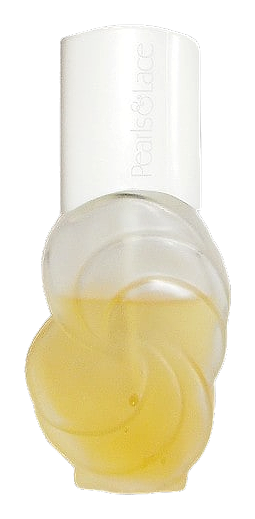

The Story
Why it exists.
The beginning
Avon released Pearls & Lace in 1985, during a decade when women's fragrance meant something specific: presence without performance. The name itself says it all, the sheen of something precious, the delicacy of something revealing. This wasn't built for the club or the red carpet. It was built for the woman who wore it to work, to church, to the grocery store, and happened to smell extraordinary doing it. Avon had spent nearly a century at that point selling scent door-to-door, one neighbor telling another. Pearls & Lace fit that model perfectly: quality you could trust, price that didn't require justifying, a floral that behaved.
What makes the structure work is restraint. The floral heart doesn't compete with itself, no sharp greens or attention-seeking aldehydes to create drama. Instead, powdery notes do the heavy lifting, giving the composition a softness that feels less like perfume and more like skin done properly. Lichen (mossy notes) adds just enough earth to keep the florals grounded, preventing that synthetic-flower quality many 80s scents couldn't escape. It's honest. It's approachable. It smells like someone who takes care of themselves without making a production of it.
The evolution
The opening arrives soft, a clean floral bloom that doesn't demand you notice it. Within minutes, the powdery heart takes over, and that's where this fragrance lives: in that talc-and-fabric-softener warmth that used to mean fresh and clean before those words became a cliché. The sillage stays moderate throughout, intimate by design. Six to eight hours later, what lingers is that quiet drydown, the ghost of rose and powder, close to the skin, the kind of scent someone leans in to catch rather than one that fills a room. On fabric, it lasts longer. The powder note especially sticks to cotton and wool, becoming that clean-soap smell you remember from childhood.
Cultural impact
Pearls & Lace lives in a particular corner of fragrance culture: the discontinued-1980s-floral affectionados who remember it fondly and hunt it on resale sites. It's not famous in the way Chanel No. 5 is famous. It's beloved in the way the right song from your childhood is beloved, not because it was the biggest hit, but because it was yours. Community reviews consistently describe it as work-appropriate, crowd-pleasing, and long-missed since its discontinuation. For those who remember it, it occupies the same sensory space as soft musk and clean laundry, the perfume equivalent of Sunday morning.