
The Story
Why it exists.
The beginning
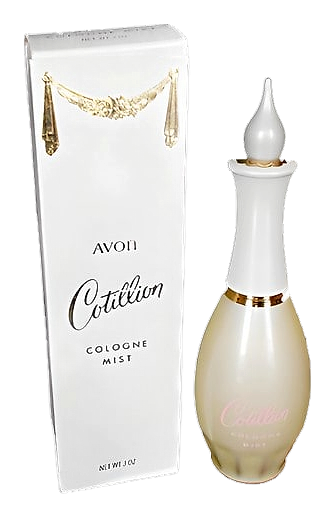
Cotillion arrived in 1934, named for the formal debutante ball, the coming-out tradition where young women were formally introduced to society. Avon, founded in 1886, had spent decades building trust through its door-to-door model, selling fragrance as an everyday ritual rather than a luxury occasion. Cotillion was a departure: a name that promised elegance and ceremony, designed for women who wanted something a little more formal than the brand's workaday offerings. The composition, warm spices, florals, and sandalwood, captured an era when a dance or an evening out called for a fragrance that meant something. The name did the work of storytelling before the bottle even opened.
What makes Cotillion's structure interesting is how the warm spices and florals share space without competing. Neither dominates. The sandalwood doesn't just anchor, it transforms, turning powdery as it settles into the drydown. It's the kind of composition that feels complete from the start: nothing arrives late, nothing overstays. The powdery warmth isn't a trick or an accident, it's the natural destination of sandalwood at this concentration, softened by florals that have nowhere to go but close. This is restraint as a design choice, not a limitation.
The evolution
The opening announces itself immediately, warm spice, floral softness, the two arriving together in a blend that reads as one gesture. No sharp top note to negotiate. Within the first minutes, the florals settle into something powdery. The spices don't disappear, they quiet down, becoming a warmth beneath the surface rather than a foreground statement. By the middle hours, sandalwood takes over. The drydown is intimate, close-skin, woody in a way that feels like warmth rather than smoke. The powdery quality intensifies slightly as the wood deepens. What surprises is the consistency: it doesn't reinvent itself. The same character that opened holds through to the end, just more quietly. On fabric, the sandalwood lingers into the next day.
Cultural impact
Cotillion sits in an interesting corner of fragrance history, not an icon, not a niche discovery, but a quiet survivor. The warm spicy and powdery character was common currency in 1934, when oriental-florals defined women's evening wear. What sets Cotillion apart isn't breakthrough innovation but consistency: the composition holds. For Avon collectors and vintage enthusiasts, it's a small piece of mid-century American perfumery that still works on skin today. The moderate sillage means it never dominates a room, which is exactly the point.