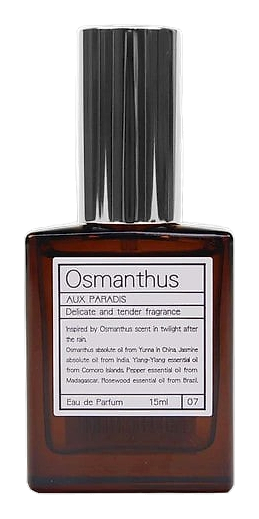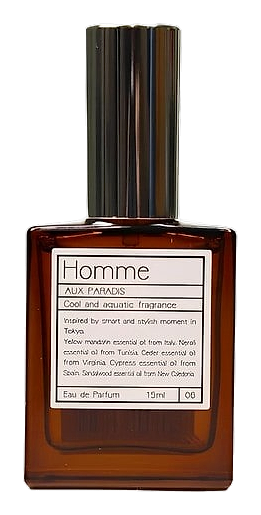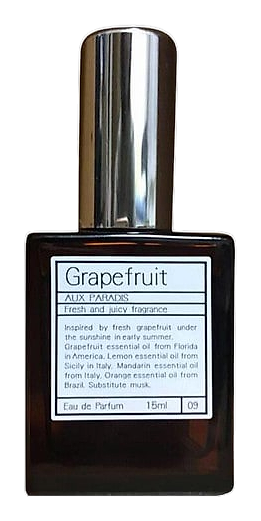
The Story
Why it exists.
The beginning
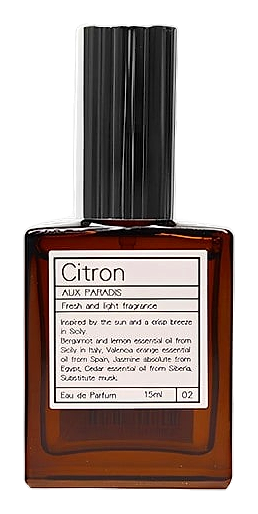
The idea behind Citron was almost defiantly simple. Aux Paradis, a small Japanese house, set out to translate everyday smells, soap, osmanthus, garden air, citrus peel, into bottled form. Citron was composed by perfumer Alain Verjus, with Sicilian lemon, orange, yellow mandarin, chamomile, and musk making up its structure. The Fragrantica listing evokes the fruit of a sunlit Sicilian orchard as inspiration, grounding the scent in a place and a season rather than an abstract concept. Verjus didn't reach for complexity. He reached for lemon, yellow mandarin, and chamomile at the top, then kept the whole composition compact enough to fit in one breath. The notes work in close quarters, each one legible, none of them crowding the others.
What gives Citron its particular character is the chamomile in the opening. It softens the sharp citrus edges, lending a subtle herbal-cool undertone that shapes the entire first impression. Without it, the lemon and mandarin might read as one-dimensional, but the chamomile introduces a tea-like quietude that sits just below the brightness, rounding the top notes into something more contemplative than shouty. Then there's the orange. Not orange blossom, not neroli. Just orange essential oil, the fruit itself rendered in perfumery terms.
The evolution
The first 30 minutes are almost startling in their brightness. Yellow mandarin hits first, rounded and sweet, then Sicilian lemon and chamomile cut in with a clean herbal snap. It's vivid and immediate, the kind of opening you register before you've even lifted your wrist to your nose. The mandarin gives the initial burst its rounded sweetness, while the lemon provides the sharper, more angular brightness. Chamomile threads through the top notes like a cooling current, its herbal softness preventing the citrus from ever tipping into aggressive territory. As the composition wears on, the chamomile fades and orange takes the wheel. The sharpness softens into something fuller, rounder, almost pulpy. The mandarin's initial sparkle mellows into a warmer citrus glow. This middle phase carries a different energy than the opening, less about brightness and more about warmth.
Cultural impact
Citron fits the Japanese-inflected daily ritual that defines Aux Paradis. It's the kind of citrus scent worn close to the skin rather than broadcast into a room. The composition rewards attention to detail, with each note legible and nothing buried under excess. The restraint of the formula, the absence of padding florals or heavy musky bases, reflects a sensibility that values precision and quiet confidence over loud projection. The fragrance has found an audience among wearers who appreciate composition that doesn't announce itself from across a room.
The House
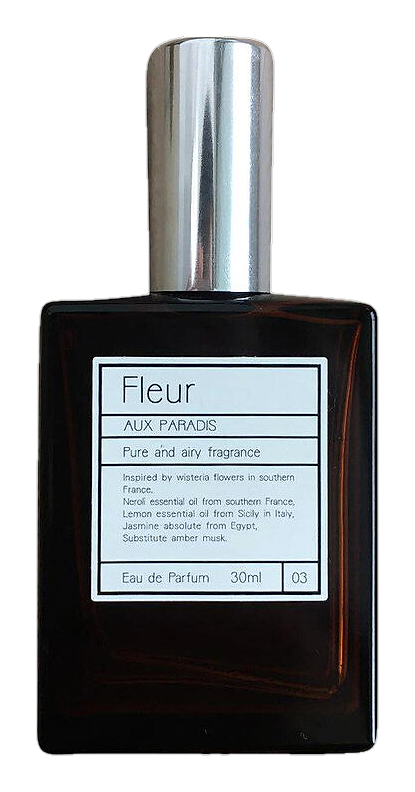
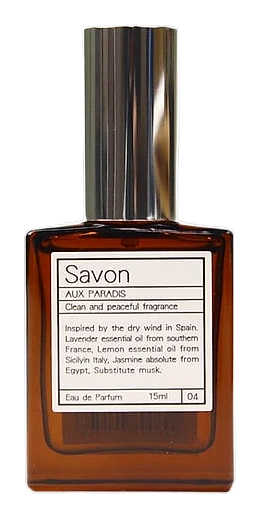
Aux ParadisAux Paradis is a Japanese fragrance house that quietly re‑imagines everyday aromas as minimalist perfumes. Since its 2008 debut the brand has built a modest catalogue that includes Osmanthus, Savon, Citron, Grapefruit, Pure, Spring Garden, Rose, Fleur, Homme and Winter Berry. Each scent is presented in a clean bottle that lets the fragrance speak for itself, offering a calm alternative to louder perfume trends.
The Creator
Alain VerjusVerjus favors natural absolutes and transparent synthetics that echo their source. He often starts with a single note—lavender, ambergris, or cedar—and lets it dictate the structure.