The Story
Why it exists.
The beginning
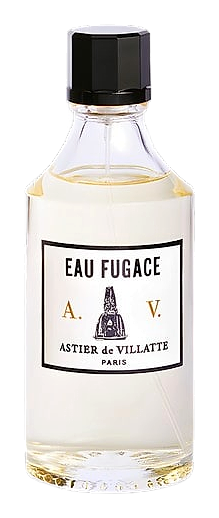
Eau Fugace, fleeting water. The name is the concept. Françoise Caron built this 2008 composition around a paradox: a fragrance named after transience. The citrus doesn't gradually fade the way most fragrances work. It announces its departure. The top notes arrive bright, insistent, then simply leave. What's left is quieter, earthier, more complex. It's a statement against the modern expectation that a fragrance should linger and project and fill a room. Eau Fugace refuses. It appears, makes its point, and disappears, like the best moments tend to do.
The green-herbal tension in the drydown is what separates this from a standard citrus cologne. Tarragon brings anise and something slightly sharp, not aggressive, but undeniably present. Oakmoss provides that forest-floor earthiness that defines the chypre family. Patchouli anchors it with dry wood. Together, they create a base that feels older than the decade it came from, quietly defiant of the projection-obsessed market it entered. The citrus top isn't decoration, it's the entrance, the performance, the moment worth capturing. Then the curtain falls.
The evolution
The opening is all citrus, bergamot, blackcurrant, orange, and lemon verbena arriving simultaneously, sharp and insistent. The blackcurrant gives it a fruity bite that keeps the citrus from reading as simple. Lemon verbena adds a green, slightly bitter edge. It holds for maybe forty-five minutes before the citrus decides it's had enough. Then it changes. The heart isn't a softer version of the opening, it's a different fragrance. Tarragon's herbal anise cuts through the neroli's bitter florals. Oakmoss emerges with an earthy, forest-floor quality that grounds everything. Patchouli appears here too, but it's the restrained 2008 version, not the heavy patchouli of later decades. The citrus doesn't fade gradually. It leaves. There's a moment where the composition seems uncertain, caught between the bright top and the mossy base, before settling into the latter. The drydown is where Eau Fugace earns its name. Musk and oakmoss create a close, intimate chypre that stays within arm's length.
Cultural impact
Eau Fugace occupies an unusual position in the 2008 citrus landscape. Released during an era when projection and longevity were becoming the market's obsession, it made transience its entire identity. The fragrance doesn't argue with convention, it simply ignores it. For those who've found it, it functions as a reference point: a particular kind of citrus-herb-chypre that rewards attention to its quieter drydown. The community calls it angular, mineral, green, descriptors that point toward a fragrance designed for a specific sensibility rather than broad appeal.