
The Story
Why it exists.
The beginning
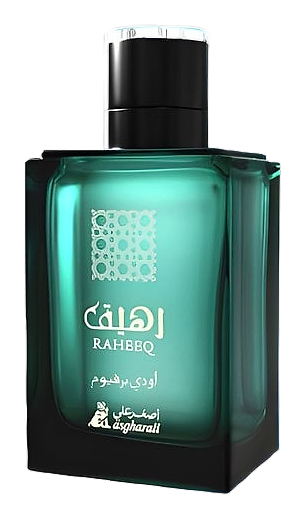
Raheeq comes from Asgharali, a perfume house with deep roots in the Gulf. The brand's catalogue leans heavily into the attar tradition, and Raheeq fits squarely within that lineage. It's bottled in a small-format presentation, aimed at wearers who want attar character without committing to a heavier extraction. The official description frames Raheeq around a citrus and floral opening, a heart that carries floral and spicy weight with woody undertones, and a base built on amber, musk and vanilla. That structure pulls from the classical Arabian attar playbook: warm, resinous, designed to sit close to the skin and hold there rather than fill a room with projection.
Raheeq's interest lies less in any single exotic material and more in how it balances the two sides of traditional Arabian perfumery. The citrus and floral opening pulls toward lighter territory, almost a cologne gesture in its brightness. Then the spicy and woody notes in the heart, followed by the amber-musk-vanilla base, drag it firmly back into attar register. That tension between the bright entry and the resinous drydown is where Raheeq earns its keep.
The evolution
On skin, Raheeq opens with a burst of citrus and soft florals that feel almost sunlit. That bright phase is the first thing you notice, and during it the fragrance reads as a straightforward warm floral, easy and approachable. Nothing here signals what's coming. Then the handoff. As the top notes begin to settle, the florals darken slightly and the spicy and woody elements underneath start to surface. This is the phase where Raheeq reveals its actual architecture: the floral heart thickens, the spice sharpens, and the composition shifts from something light into something warmer, denser, unmistakably ambery. The transition is gradual but unmistakable, and the citrus gradually yields to the base. The drydown is where Raheeq lives. Amber, musk and vanilla settle into a close, warm base that stays intimate against the skin.
Cultural impact
Raheeq sits within Asgharali's attar catalogue, a category the house has built its identity around. For wearers familiar with Gulf fragrance heritage, it reads as a recognizable execution of the style: a bright citrus-floral opening, a spicy-woody heart with floral weight, and an amber-musk close that carries the dry, warm finish the format is known for. The composition moves through its phases with a logic that anyone versed in traditional Arabian perfumery will recognize, and that familiarity is part of its appeal. For international fragrance enthusiasts exploring the category, it offers a compact, approachable reading of the attar form.