The Story
Why it exists.
The beginning
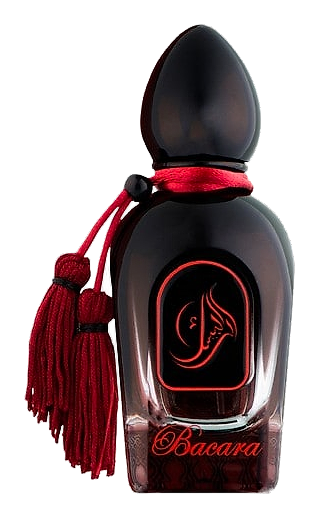
Miroslav Petkov designed Bacara in 2017 as a counterargument to the assumption that Arabian fragrances must begin and end with oud and amber. The name draws from Bacara, the coral archipelago off the coast of the Arabian Gulf, where salt air meets warm stone. Petkov wanted a fragrance that could live in both worlds: rooted in regional heritage yet fluent in the global language of citrus. The brief was straightforward, something that opens bright, behaves well through a workday, and leaves no one asking what you smell like. But underneath that practicality lived ambition: a citrus structure that felt composed rather than casual, with enough unusual material to reward attention without punishing it.
Rhubarb is the surprise. In Western perfumery it's a green note, tart and slightly bitter, more associated with early summer gardens than fragrance pyramids. In Bacara it does something unexpected: it doesn't snap. It softens. It bridges the citrus burst and the cedar warmth in a way that feels deliberate rather than accidental. The cedar works as the structural element, not dramatic, not projecting, but holding the composition together like a spine. White musk at the base prevents the oakmoss from going too austere, adding a softness that keeps the drydown intimate rather than imposing. It's a composition built on restraint, each layer doing exactly enough, nothing reaching for effect.
The evolution
The opening hits fast, bergamot and pink pepper arriving together, the pepper adding a slight prickliness that stops the citrus from going flat. Tangerine follows within minutes, sweeter and rounder, pushing the bergamot toward something almost edible. The rhubarb doesn't announce itself. It arrives quietly around the 20-minute mark, shifting the energy from fresh to slightly vegetable, which sounds wrong until it isn't. Cedar takes over as the dominant note by the hour mark, with lemon zest giving it an aromatic lift. The base builds slowly, ambergris arriving as a warmth rather than a statement, oakmoss adding mineral depth, white musk keeping everything close to the skin. By hour three the citrus has faded completely, leaving a quiet cedar and musk drydown that lingers for another two hours on most skin types.
Cultural impact
Bacara occupies an unusual position in the regional fragrance landscape: a citrus-forward composition from a house better known for its woody and oriental interpretations of Arabian heritage. Where most Gulf-region houses lead with oud, amber, or rose, Bacara bets on brightness and restraint, a fragrance that speaks to a wearer who wants to be recognized for something other than sillage. The 2017 launch coincided with a broader cultural shift in the UAE toward lighter, more versatile daily wear, and the fragrance found its audience among professionals and younger collectors who appreciated the restraint. It's not a statement piece. It's something you wear when you want the conversation to be about you, not about what you're wearing.