
The Story
Why it exists.
The beginning
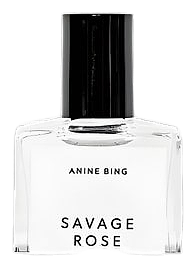
Savage Rose is a fragrance from Anine Bing. The rose here isn't the English garden variety, all petals and politeness. It's named Savage for a reason. White rose at the center, black pepper at the edge, white musk closing it down. This isn't a soft floral. The composition is built around contrast: the cool, almost dewy quality of white rose set against the dry, assertive bite of black pepper, anchored by a clean white musk that refuses to let the whole thing slip into sweetness. The pepper doesn't behave like a standard floral top note. It cuts, sharpens, and creates an immediate tension that the rest of the fragrance has to answer to.
What makes this composition interesting is its restraint. Three notes, maybe four if you count Bulgarian rose as separate from white rose, and every one of them pulls weight. Black pepper does the structural work that most fragrances hand to citrus or aldehydes. It opens sharp, almost architectural, and refuses to behave like a standard floral top. The rose is white, not red, meaning it reads cooler and more modern, less grandmother's vanity. There's a clarity to how the three notes relate to each other.
The evolution
The opening belongs to pepper. Sharp, almost architectural, the kind of first impression that catches you mid-sentence. It doesn't sparkle like citrus or bloom like neroli. It cuts, delivering a dry heat that demands attention. Then white rose starts threading through, cool and dewy, picking up the warmth the pepper left behind. The transition reveals the composition's real character: rose softened by musk, still close to the skin, still a little cool, but no longer sharp. The interplay between the three notes creates something that feels alive on the skin, shifting as the hours pass. The musk gradually takes over as the composition settles, and what stays is a quiet, warm, skin-like presence that feels more like an aura than a scent trail. Nothing projects dramatically. Nothing needs to.
Cultural impact
Savage Rose reads as fashion-aware without trying to impress. The pepper-rose-musk combination feels considered, the kind of scent that communicates taste rather than volume. Wearers gravitate toward it for its restraint. It doesn't announce itself across a room; it stays close, intimate, almost private. There's an intentionality to the composition that suggests someone who thought carefully about what they wanted their skin to smell like rather than reaching for the most obvious rose on the shelf. The white rose at the center avoids the sweetness and old-fashioned associations that traditional rose fragrances can carry.