
The Story
Why it exists.
The beginning
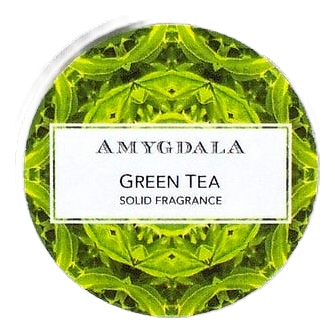
Amygdala is the perfumery built around a simple wager: a single raw material, given room to speak, can hold attention longer than a crowded formula. Green Tea sits among the brand's studies as one of its cleanest expressions of that idea, one raw botanical, nothing else, nowhere to hide. The approach here is almost stubborn in its simplicity. No supporting citrus brushed across the top. No woody drydown engineered to add fictional depth. No gourmand sweetness to round the edges into something familiar. Just green tea, presented the way it smells when you crack a tin of good leaves and lean in. The fragrance asks you to consider what one ingredient actually smells like when it's allowed to be itself, unaccompanied, unsupported, given the whole stage.
Green tea as a fragrance note is famously tricky to render honestly. Most compositions use it as a top-note accent, blended with citrus or mint to suggest the leaf without committing to its actual scent. Green tea alone, at the heart of a composition, is a different project entirely. The leaf carries a vegetal quality, a quiet savory edge that sits alongside a certain dryness, and most accords soften that tension with brighter or sweeter companions. The choice to strip all of that away is a deliberate one. McGovern's version leans into what remains. There's no sugar to soften the profile.
The evolution
The first ten minutes are the loudest this gets. A bright, almost sharp green hits the skin, the kind of fresh-cut-leaf clarity that makes you think of steam rising from a just-brewed cup, of wet vegetation in early light. The opening arrives quickly and announces itself with a clarity that feels almost edible. It settles fast. By the 40-minute mark, the initial sharpness has softened into something rounder. The green tea reads less like a plant held in your hand and more like an idea of tea, warm, faintly sweet, mineral in a way that recalls the clay of a good teapot rather than the leaf itself. The astringency loosens. The bitterness quiets. There's no dramatic shift into a new phase, no surprise base note waiting in the wings to change the conversation. The fragrance simply rounds itself out, the way a long steep transforms a cup from sharp to mellow.
Cultural impact
Single-note fragrances occupy a peculiar corner of the fragrance world, part study, part provocation, part wearing experiment. They ask something different of the wearer than layered compositions do. Instead of unfolding through contrasting chords, they hold one position and invite you to sit inside it. Green Tea lives squarely inside that territory, offering an uncluttered reading of a single botanical without ornament, without contrast, without the social volume that most fragrances aim for. It appeals to wearers who treat fragrance as a private language rather than a social broadcast.
The House
AmygdalaAmygdala is a name shared by two distinct fragrance ventures. The most widely referenced is the artistic Italian niche house Mendittorosa's Amygdala, a unisex composition launched in 2022 as part of the Talismans Extreme Collection. Created by perfumer Luca Maffei in collaboration with Mendittorosa founder Stefania Squeglia, it draws its concept from the brain's emotional center. Separately, Amygdala is also a UK-based fragrance house founded by perfumer Kimberley McGovern in 2016, debuting with an initial collection of ten single-note fragrances that same year.
The Creator
Kimberley McGovernMcGovern favors intimate compositions, the kind that reward close wearing rather than projecting across a room. Her work tends toward the personal and slightly nostalgic: soft florals, vanillas, powdery accords, and the occasional surprise of something greener or more animalic.