
The Story
Why it exists.
The beginning
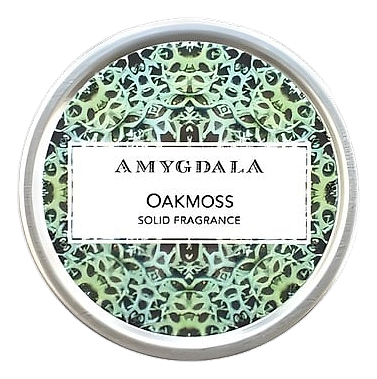
Oakmoss by Amygdala is a fragrance built around a single raw material, and that material is allowed to carry the entire composition without any supporting cast. No floral scaffolding, no citrus lift, no gourmand softening at the edges. Just oakmoss, isolated, studied, and presented in its own terms rather than dressed up for a broader audience. The approach here is one of studied reduction. Rather than treating oakmoss as a structural support, something to ground brighter ingredients above, the composition makes it the main event. It's a kind of material portrait, asking the fragrance to sit with a single botanical and let it speak for itself. The wearer is invited into a quiet, focused encounter rather than offered a layered narrative.
The oakmoss at the center of this composition is Evernia prunastri, a lichen harvested from the bark of oak trees. In most fragrances it appears as a structural element, grounding the chypre family with its dry, earthy, slightly bitter presence. Letting it lead on its own shifts the entire texture of what oakmoss can do in a bottle. When oakmoss steps forward, its particular dualities become the whole conversation. The damp, forest-floor quality carries both decay and greenness at once, a kind of living rot that smells strangely alive.
The evolution
On skin, Oakmoss opens with a cool, almost metallic dampness, the kind of wet-stone coolness that clings to oak bark after rain. There's nothing bright or lifted in the opening. It arrives heavy and low, pressing close rather than projecting outward, settling into the warmth of the skin rather than announcing itself to the air around it. The ink and leather that share the composition surface early on, lending a dry, tannic quality, something like the smell of an old writing desk or a leather book cover slightly damp from humidity. There's a graphite-like sharpness to the ink note that gives the opening a particular edge, a sense of darkness without weight. As the composition moves forward, that sharpness gradually softens, the leather warming up and losing its initially taut character, becoming more suede-like and rounded as it meets skin.
Cultural impact
Oakmoss sits within a specific lineage: the single-note fragrance, a tradition built around one material presented without traditional pyramid structures or top-note brightness. These compositions tend to attract wearers drawn to introspective scents over the more common gourmand or floral territory. Oakmoss fits that sensibility naturally, and its particular appeal is to those who prefer damp, green, contemplative compositions. It's the kind of fragrance you wear for yourself, on a quiet afternoon, rather than to an event. There's nothing performative about it, nothing designed to register from across a room.