
The Story
Why it exists.
The beginning
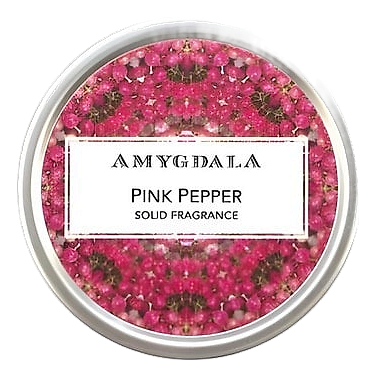
Pink Pepper arrives as a single-note composition from Amygdala, a fragrance house with Kimberley McGovern credited as the nose behind the scent. The approach is direct in a way that's easy to undervalue: one botanical, isolated and presented as a complete composition rather than as a supporting note within a layered structure. Pink pepper is typically encountered as a bright accent in larger fragrances, a top-note lift that fades within minutes. Here it occupies the entire frame. The accords listed on the source material confirm what the bottle implies: soft spicy, musky, and sweet, with rose and herbal threads suggesting that the berry's natural floral facets, often muted when the ingredient plays a supporting role, finally have room to surface.
Pink pepper is botanically unrelated to black pepper. The dried berry of the Schinus molle tree, it carries a sweeter, rosier warmth, more aromatic than aggressive. In most compositions it's a supporting player, a bright accent in the top notes designed to lift a composition's first few minutes before fading into the blend. Here, pink pepper isn't an opening courtesy, it's the architecture, the structure, the entire building.
The evolution
On skin, Pink Pepper announces itself immediately with that rosy, slightly sweet spice, the berries' natural warmth before any dryness or bite sets in. The opening is almost effervescent, the way pink pepper can read when it hasn't been crushed under heavier materials. For a while after the first spray, the scent feels lifted, almost airy, with a faint herbal coolness that keeps the sweetness from tipping into confection. The pepper reads more like a dried fruit than a seasoning, closer to rose hips or warm cardamom pods than to anything you'd grind from a mill. Then the musky accord begins to surface. This is where the fragrance deepens, settling into a warmer, more skin-like register where the spice feels less like a crushed berry and more like body warmth.
Cultural impact
Pink Pepper sits within a particular conversation about how ingredients are presented in modern fragrance. Most people's experience of pink pepper comes from larger compositions where the note fights for space among dozens of others, a flash of warmth in the opening that disappears before the wearer registers it as anything distinct. Wearing Pink Pepper is a different proposition. The note is given the full duration of a composition to express itself, which means the wearer actually gets to know what pink pepper smells like when nothing is competing with it. That shift in context changes how the ingredient is perceived.
The House
AmygdalaAmygdala is a name shared by two distinct fragrance ventures. The most widely referenced is the artistic Italian niche house Mendittorosa's Amygdala, a unisex composition launched in 2022 as part of the Talismans Extreme Collection. Created by perfumer Luca Maffei in collaboration with Mendittorosa founder Stefania Squeglia, it draws its concept from the brain's emotional center. Separately, Amygdala is also a UK-based fragrance house founded by perfumer Kimberley McGovern in 2016, debuting with an initial collection of ten single-note fragrances that same year.
The Creator
Kimberley McGovernMcGovern favors intimate compositions, the kind that reward close wearing rather than projecting across a room. Her work tends toward the personal and slightly nostalgic: soft florals, vanillas, powdery accords, and the occasional surprise of something greener or more animalic.