The Story
Why it exists.
The beginning
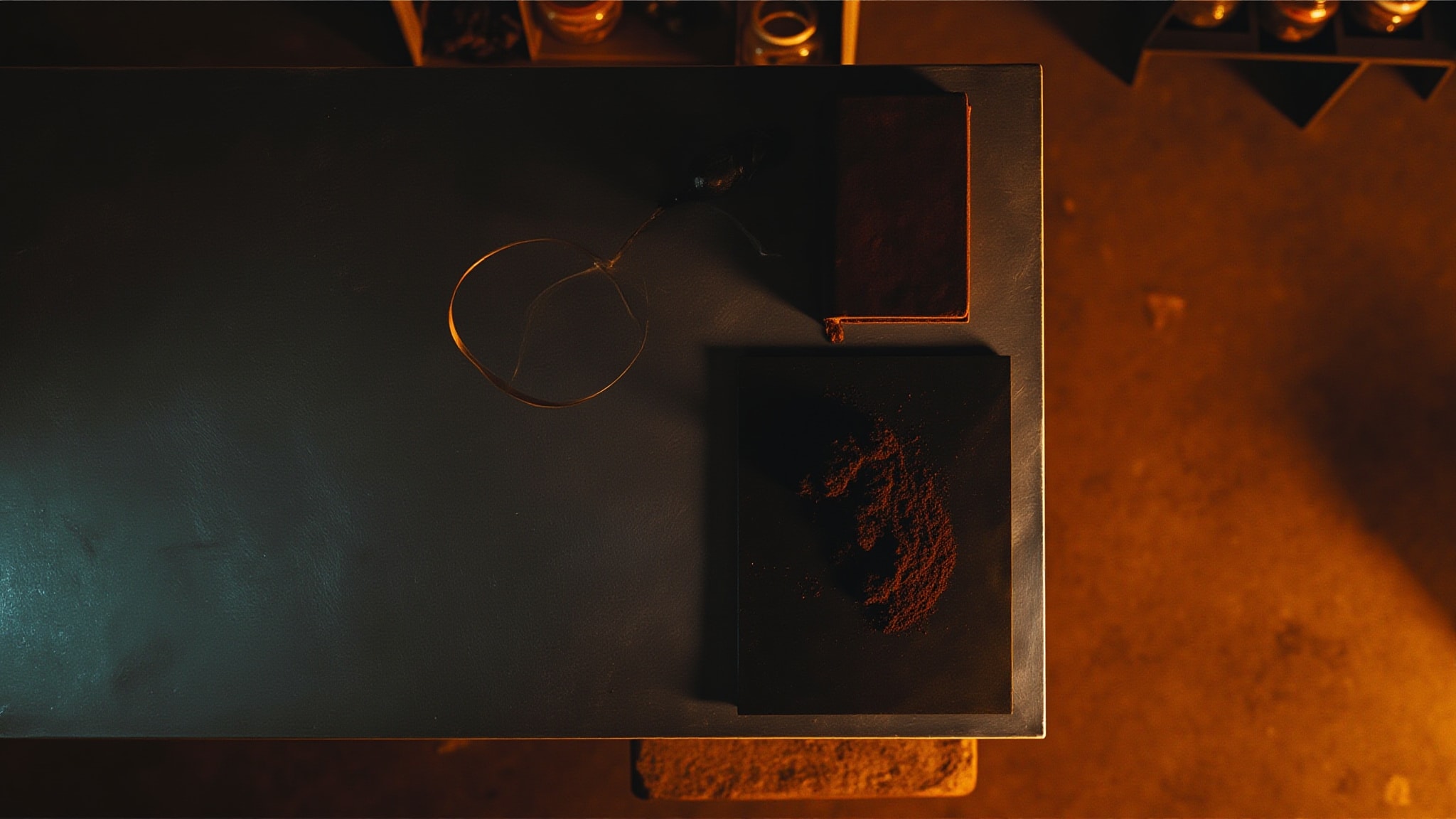
Sigil draws directly from a 16th century grimoire, a recipe book of ritual intention where scent was inseparable from spellcraft. Alkemia's perfumer rebuilt that formula: olibanum frankincense, lignum aloes, bdellium, styrax, black honey, euphorbia, opium, dried citrus, and a compounding of roasted coffee with ritual herbs. It's not a fantasy of alchemy. It's a transcription of an older practice, lifted from the page and poured into a bottle. The result reads less like a modern perfume and more like a working: ingredients chosen for their old symbolic weight as much as their smell. The resins arrive stacked and deliberate, each one weighted with a history of ceremonial use, and the coffee grounds the whole composition in something darker than a typical oriental.
What sets Sigil apart is the refusal to sweeten the medicine. Most resinous fragrances cushion their frankincense and myrrh with vanilla, amber, or fruit. Sigil pairs its incense stack with black honey and opium, materials that darken rather than comfort. The coffee is roasted, not the gourmand suggestion of a coffee shop. Euphorbia adds a faint bitterness that grounds the composition in something older than perfume. Alkemia called this a grimoire recipe for a reason. The blend reads more like a preparation than a pleasure.
The evolution
The opening is sharp, almost confrontational: frankincense and oud cut through, the dried citrus offering a brief bright edge before getting swallowed by resin. Then the coffee arrives, not as a drink but as grounds, dark and slightly burnt, sitting underneath everything. As the composition warms, the black honey emerges, thick and treacly, pulling the incense stack downward into something heavier. The styrax and opium creep in, adding a leathery sweetness that smells closer to something ritualistic than edible. The drydown settles into a quiet resinous hum that lasts for hours. Euphorbia leaves a faint bitter-green trace underneath, a vegetal shadow that keeps the sweetness honest. What's surprising is how the oud behaves; it never dominates. It supports, lifting the incense rather than burying it.
Cultural impact
Sigil carves out its own space through its grimoire concept, a framing that gives it a narrative weight that purely note-driven compositions often lack. The fragrance reads as a working rather than a wear, and that framing resonates with collectors who treat perfume as artifact. Its incense stack and dark gourmand undertones place it within a broader conversation about ritual fragrance, the kind of blending that borrows from ceremonial and apothecary traditions rather than mainstream perfumery.