The Story
Why it exists.
The beginning
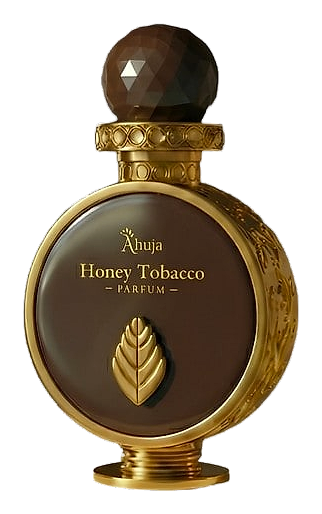
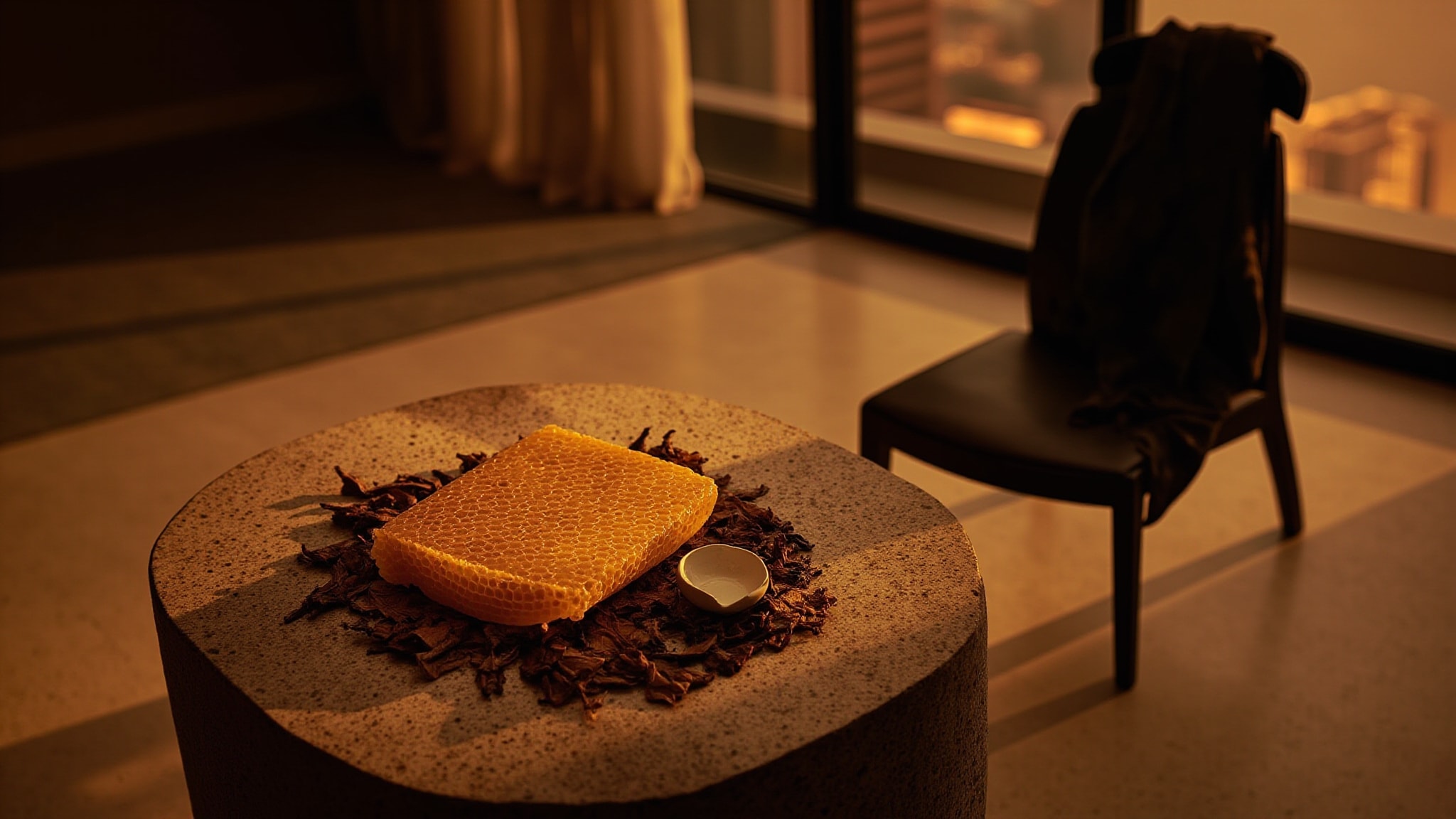
Ahuja launched its consumer fragrance line in 2025, and Honey Tobacco arrived as part of the brand's Private Line collection. The composition takes the old-world pairing of honey and tobacco and sets it up as a study in contrasts that somehow find each other anyway. On first spray, the honey reads waxy and almost burnt, the way raw honeycomb smells when you crack it open in a warm kitchen, sitting right next to a dense, cured-leaf tobacco that arrives with weight rather than smoke. As the opening settles, the honey keeps its sticky, resinous character but loses the heat, cooling into something closer to dried fruit and dark molasses. The tobacco deepens alongside it, picking up a leathery quality that feels closer to an old tobacco pouch than any ashtray impression.
What makes this composition worth paying attention to is the repetition of amber across every phase of the pyramid. It shows up in the top, the heart, and the base, acting less like a single ingredient and more like the scaffolding the entire fragrance hangs on. Most compositions treat amber as a destination, something you arrive at during the drydown. Here, it's the road, the vehicle, and the arrival. The amber in the opening reads almost like a warm honey drizzle, sweet but with a resinous edge that grounds it.
The evolution
The first thirty minutes feel almost edible. Honey does what honey does in fragrance, it sweetens everything it touches, and here it's draping itself over tobacco absolute with a kind of thick, golden confidence. The amber scaffold is already working underneath, but it's invisible, doing the job of keeping the sweetness from sliding into candy territory. For the first hour or so, this is a warm, confection-leaning tobacco, the kind of scent that makes people lean closer at dinner. Then the resins start to surface. Labdanum arrives with its warm, leathery, slightly animal hum, and the tonka bean begins adding its almond-vanilla undertow. The honey recedes but doesn't disappear, it becomes the thread connecting everything rather than the main statement. By hour three, the fragrance has shifted from golden to amber-brown, less confection, more cured leaf and warm wood. The spices in the heart stay present but recessive, a suggestion rather than a declaration. The drydown is where the charred wood earns its place in the base.
Cultural impact
Worn by people who reach for a pour of something dark after dinner rather than a spritz of cologne before one. Honey Tobacco has drawn comparisons to Guerlain's Tobacco Honey, a shared reference point that comes up often when collectors discuss the tobacco-honey combination. It wears as a cold-weather composition, best understood by the kind of wearer who treats scent as private language. The fragrance's appeal sits in its refusal to soften itself for broader appeal, and that quality has earned it a following among wearers who want their scent to read as intimate rather than performative.